surfresearch.com.au
surfer-manufacturer
: midget farrelly
| home | catalogue | history | references | appendix |
|
surfresearch.com.au
surfer-manufacturer
: midget farrelly
|
|
|
|
|
|
|
|
|
|
|
|
|
|
|
|
|
|
|
|
|
|
|
|
|
|
|
|
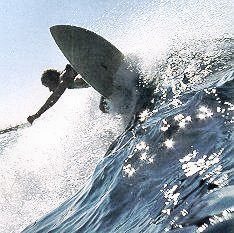
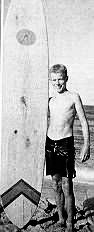
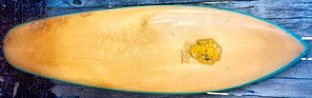
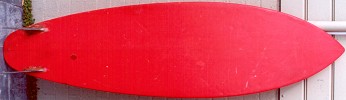
| 1958 1st contest, South Avalon, fourth in the final Early manufacturing experience in several factories in Brookvale, Sydney, including: Barry Bennett Surfboards Scott Dillon Surfboards Keyo Surfboards Image Left : Midget Farrelly and balsawood - fibreglass Pig board, circa 1958. Note hand-painted Oval + M at sweet-spot and two tone offset bands at tail. Probably not the board shown in Junior Surfers, Manly 1958. Surfboard Design Modern World Magazine, July 1971, pages 30 - 36. |
 |
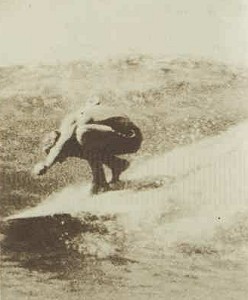
| The Australian
Women's Weekly Wednesday 20 September 1961, page S4 (Supplement- Teenagers' Weekly). Bernard "The Midget" Farrelly
doing a perfect "quasimoto." Ron Perrott, of Harbord, took the picture. |
 |
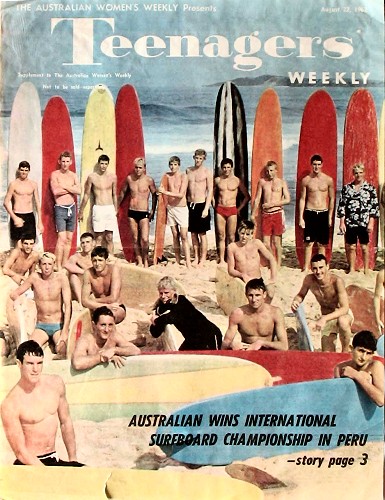
| The Australian Womens' Weekly Wednesday 22 August 1962, Teenagers' Weekly (Supplement) cover Cover image contributed by John Witzig, with many thanks, May 2011. Our cover boys are some of the surfboard riders who competed at Narrabeen, one of Sydney's northern beaches, during the rally organised by the South Pacific Surf Riders Club last season. ( -page 41). Cover story: Australian Wins International Championship in Peru -story page 3. John noted that Midget Farrelly is kneeling in the centre of the photograph. The other surfers require identification. Note that most of the boards, probably early foam, are coloured and decals are impossible to identify. Some of the boards in the centre appear to be balsawood. Also note the twin fin bellyboard, centre of the rear row. While most wear long legged boardshorts, several are in nylon briefs. Some boardshorts have an external thick white waist cord, a short-lived fashion accessory- for example those of John Knobel (see below). See Source Documents: 1960 Australian Womens' Weely : Surfing. Extracts from 1961, 1963, 1964 and 1966. |
 |
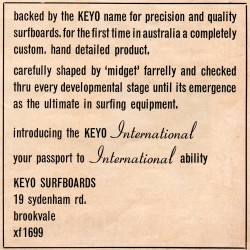
| A 1963 advertisement for Keyo Surfboards states that their boards are shaped by the
current Makaha champion, Midget Farrelly. Surfing World Volume 2 Number 6, August, 1963, page 3 |
 |
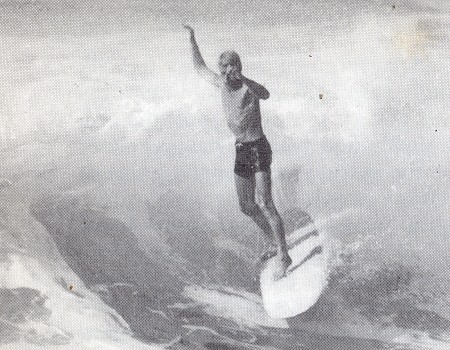 Midget fights
for balance in the turbulent shore-break
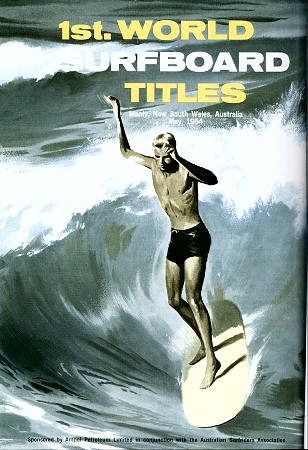
during the 1963 Hawaii winter season. This Surfing Life, page 36. The photograph was used for the illustration on the cover of the program for the first world titles at Manly in 1964. |
 |
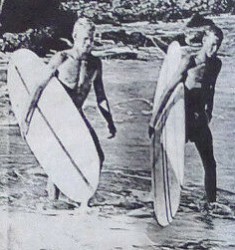 Nat and Midget.
The Bulletin,
1963.
|
 |
Makaha International
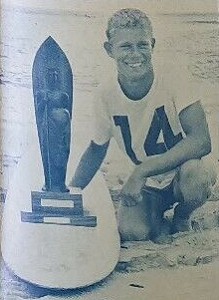
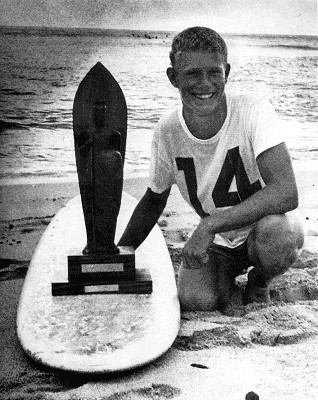
Surf Championships, December 1962. Bernard "Midget" Farrelley, 1st place in the senior men's. Photo : Ron Church Surfer Volume 4 Number 1 page 47, February 1963. Midget
Farrelly and Makaha Trophy, December 1962.
Photograph : Ron Church Reprinted in Australian Longboard Magazine June 2004, page? |
 |
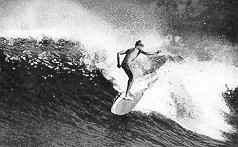 |
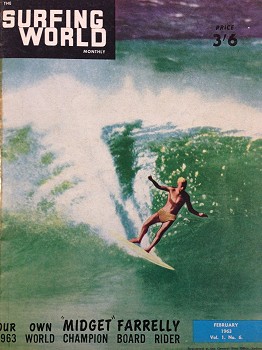
1962 Makaha International
Championship-1st,
1 January 1963, Makaha Beach, Hawaii 6 foot surf. Left : Midget Farrelly : Masterly controlled spinner circa 1963, Pollard page 8. Surfing World
Volume 1 Number 6 1963 Feb |
 |
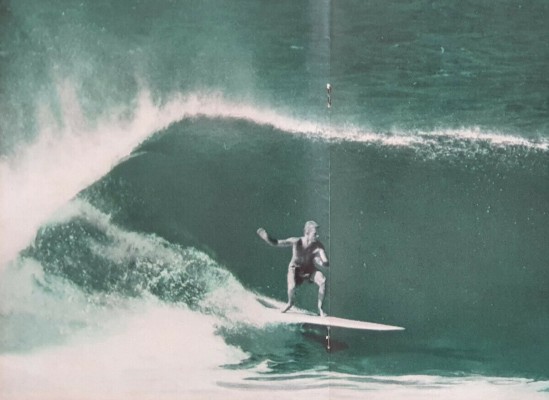
| Surfing World Volume 2 Number 1, March 1963. Pages 18-19. For some early biographical notes, see: Centre Fold. This
magnificent shot of Midget, taken six weeks ago at
the Banzai Pipeline is a fine illustration
of his balanced riding. Photo by Bud Browne. |
 |
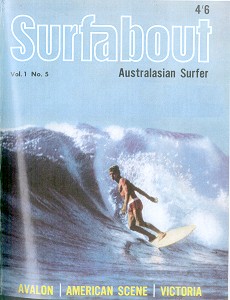
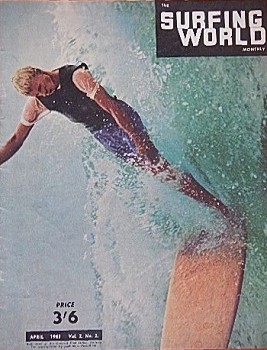
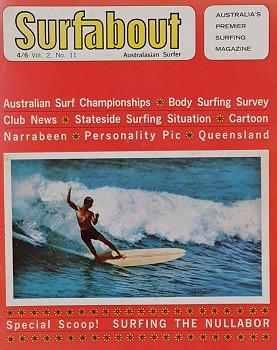
| 1962-1963 Shaper for Keyo Surfboards Surfabout Volume 1 Number 5 1963, cover right. Surfing World v2 n2 1963 April, cover far right. 1964 Australian Championship Manly Beach Sydney Held as a preliminary to the World Championships 1. Midget Farrelly 2. Mick Dooley 3. Bobby Brown. Junior: 1. Robert Conneely 2. Nat Young 3. Wayne Cowper |
 |
 |
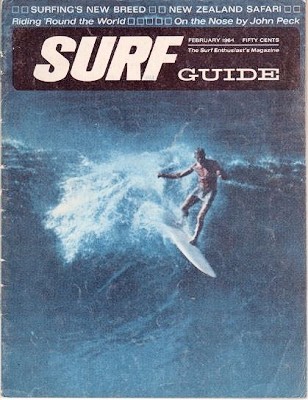
| Surf
Guide (USA)
February, 1964 Cover: Midget Farrelly |
 |
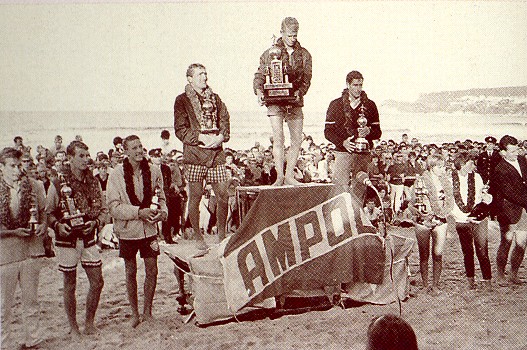
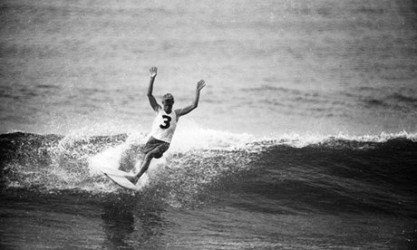
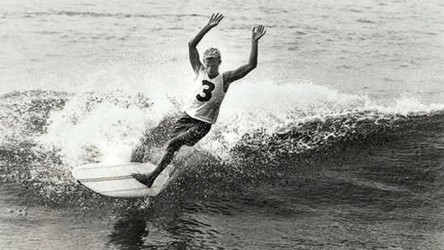
| 1964 World Championship
Manly Beach Sydney 1st Midget Farrelly 2nd Mike Doyle (USA) 3rd Joey Cabell (Hawaii) 4th L.J. Richards (USA). 5th Mick Dooley 6th Bobby Brown World
Tittles Awards, Many Beach, 17 May 1964 .
Photograph by Ron Perrott. |
 |
 |
 |
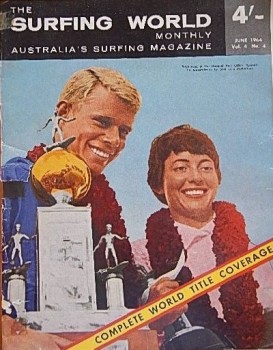 |
Surfing World
v4 n4 1964 June Midget Farrelly: World Contest Final Cut-Back, Manly, 1964. Photograph by Ron Perrott Surfer Volume 5 Number 4 September 1964, page 39. The multi stringered foam board was strongly influenced by Phil Edwards' designs. |
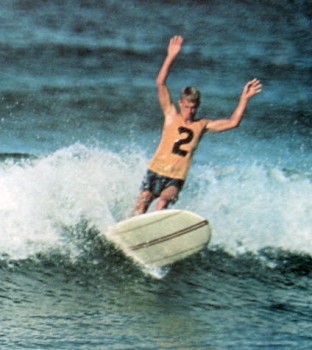 |
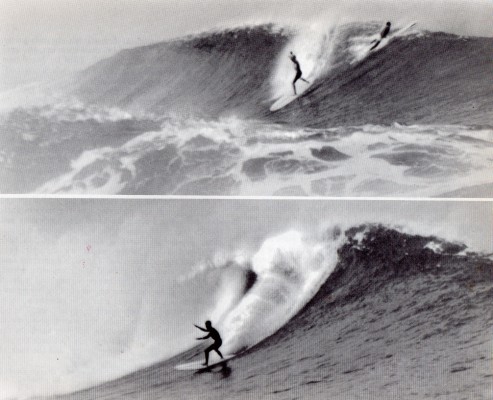
Midget Farrelly: Forrests Beach sequence, circa 1964. This Surfing Life page 62. |
 |
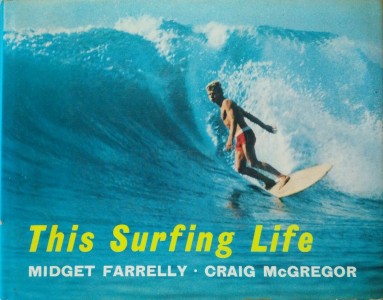
This Surfing Life
Adelaide, 1965. |
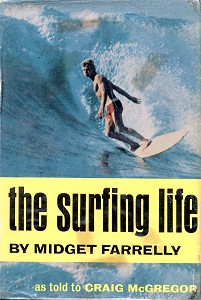 The Surfing Life New York,1967. |
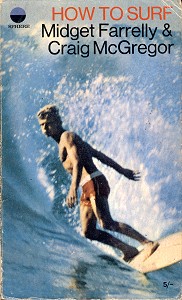 How to Surf London,1968. |
|
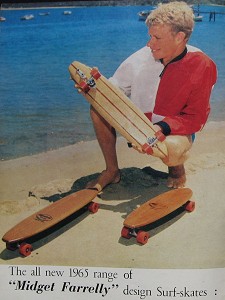
Midget Farrelly Surf Skates, 1965. 2 page advertisement Surfing World February 1965 Volume 5 Number 6 . |
 |
| 1965 Australian Championships
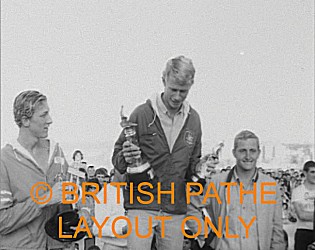
Manly Beach Sydney May 1965 1st Midget Farrelly (First use of stringer-less design) 2nd Nat Young 3rd Bob McTavish. Junior - 1st Peter Drouyn, 2nd Kevin Brennan Women - Phyllis O’Donell 1965 Australian Championships, Manly NSW, May 1965. http://www.britishpathe.com/video/news-from-australia-3/query/surfing News from Australia: Manley. [sic] |
 Cover: Surfabout v2 n11 1965 |
 |
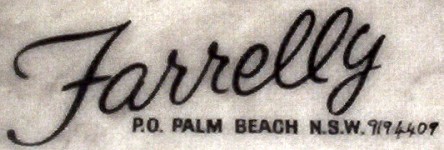
| circa 1965 Started Farrelly Surfboards, PO Box Palm Beach 919 4409 Frank Gonslave's Boat Shed, Palm Beach Employee: Warren Cornish. Decal image left, with thanks, Pete Williams |
 |
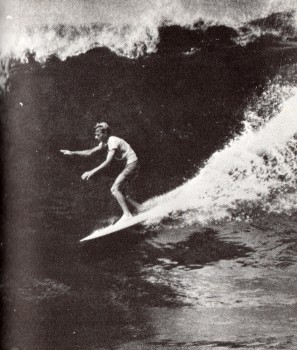
| 1965 World Championship, Semi
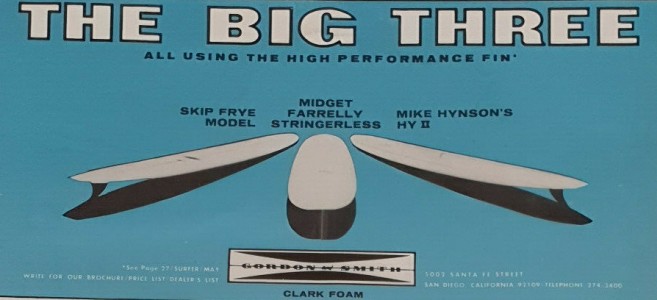
Finalist, Punta Rocas Peru , Small waves -1st,? Positive response to the stringerless design sees this model licensed to Gordon and Smith Surfboards, California, the first of many. Midget
Farrelly surfing at Punta Rocas, Peru in the world
championships.
Photograph
by Richard Graham.
Olney and Graham: Kings of the Surf New York, 1969, page 65. |
 |
| 1966 World Championship finalist.
Huntington Beach, California. 1st Nat Young (Aust) 2nd Jock Sutherland (H) 3rd Corky Carroll (USA) 4th Steve Bigler (USA) 5th Rodney Sumpter (UK) 6th Midget Farrelly (Aust) |
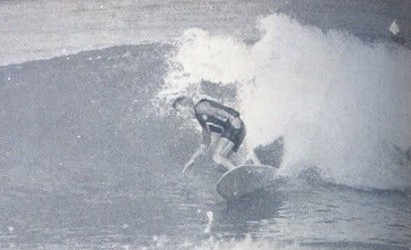 Midget, Ocean Beach Witzig, John: The World Championship Contest Story. Surfing World November, 1966, Volume 8, Number 4, page 24. |
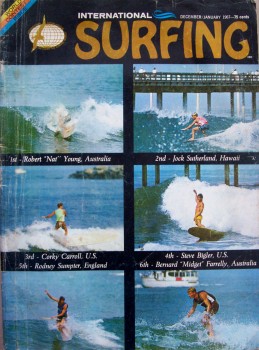 International Surfing 1967 Dec |
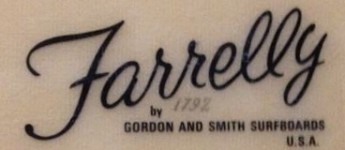
1966 Stringerless Model
for Gordon and Smith Surfboards, USA. 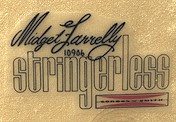 |
 |
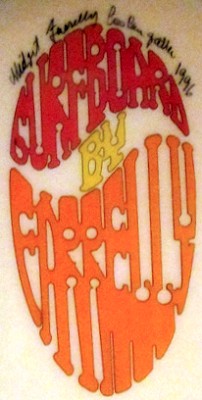 |
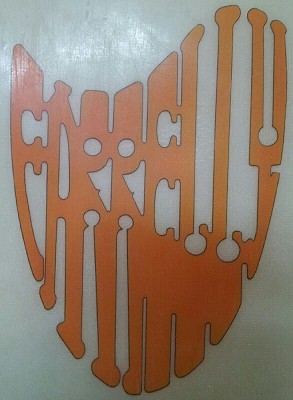
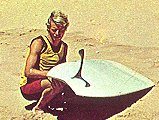
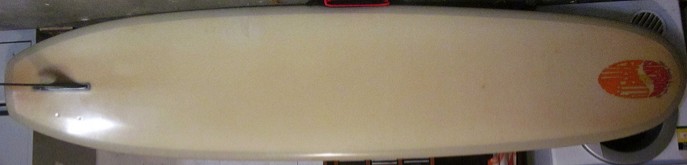 1967 Australian Championship, 3rd,??, Bells Beach Vic. See Part Five of The Hot Generation 1st Nat Young 2nd Peter Drouyn 3rd Midget Farrelly Midget Farrelly rides a volan glassed clear stringerless board, with concave nose and distinct nose lift, approximately 9 ft 2'' x 22''. Nat Young's board features 6 ft of Vee in the tail. The basic elements of these two boards in the next six months would be developed into the Vee-bottom Short board. Decal image and board above: Farrelly, Stringerless 9 ft 0", 1967. Catalogue #350 Decal (trimmed) thanks
to snazzy, January 2019.
|
 |
 |
1967 Windansea Contest,
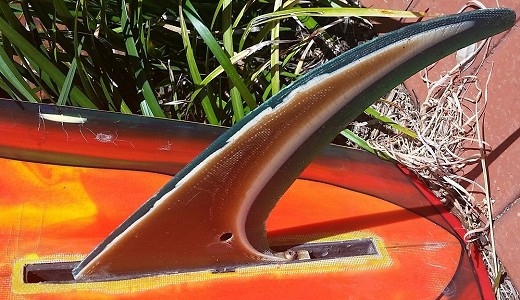
finalist -October, Northern Beaches (Long Reef, Palm Beach) Image Left : Midget and his version of the Plastic Fantastic Machine, Palm Beach Oct 1967 - stringerless, Vee bottom, chamfered pod with own fin design in adapted finbox. Carter page 71. This design made under liscence in the US by Gordon and Smith Surfboards. |
| 1968
Bobby Brown Memorial Contest 1st place.
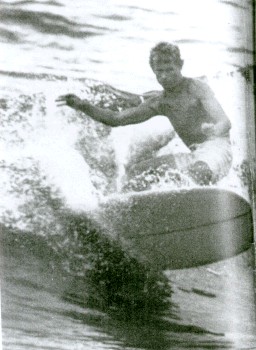
10-11th January 1968, Cronulla Australia. See Lester Brien: Bobby Brown Memorial Contest. Surfing World Volume 10 Number 4, March-April 1968, pages 32 to 35. Image right: Cronulla, 10-11th January 1968. Midget demonstrating one of his "lousy cutbacks ... during which he either steps off the inside rail or, digs it." - Lester Brien, page 32. |
 |
| Right:
Farrelly Surfboards, 1968.
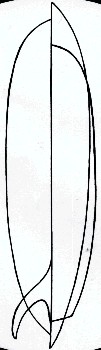
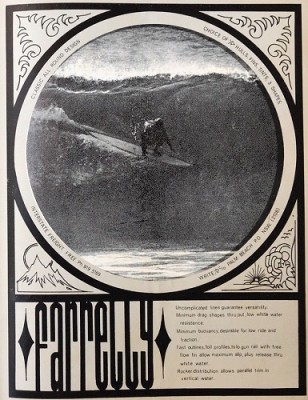
Advertisement Graphic. Accompanying text: Classic All Round Design. Choice of Hulls, Fins, Tints, 3 shapes. Interstate Freight Free. Ph. 919 5169. Write: Palm Beach PO NSW (2108). Uncomplicated lines guarantee versatility. Minimum drag shapes thru,out, low white water resistance. Minimum buoyancy,desirable for low ride and traction. Fast outlines, foil profiles,hi-lo gun rail with free flow fin allow maximum slip, plus release thru white water. Rocker distribution allows parallel trim in vertical water. Surfing World Volume 10 Number 4, March-April 1968, page 22. |
 |
 |
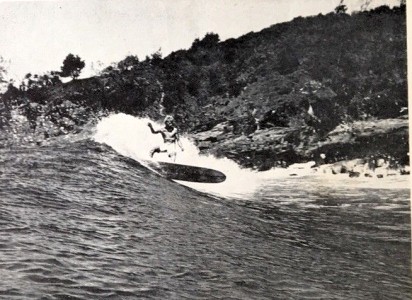 Midget Farrelly, Noosa Heads, 1968. Surfing World May 1968 Volume 10 Number 5 page 11. Riding
(about) an 8ft pin-tail, similar to those used at the
1968 Australian Titles and the first Bobby Brown
Memorial Contest.
Photograph
: Alby Falzon
|
Farrelly Surfboards.
Classic All Round
Design.
Choice of Hulls,
Fins, Tints, 3 shapes.
Interstate Freight Free. Ph. 919 5169. Write: Palm Beach
PO NSW (2108).
Uncomplicated lines guarantee versatility. Minimum drag shapes thru,out, low white water resistance. Minimum buoyancy,desirable for low ride and traction. Fast outlines, foil profiles,hi-lo gun rail with free flow fin allow maximum slip, plus release thru white water. Rocker distribution allows parallel trim in vertical water.
|
 |
| 1968 Australian Championship ,
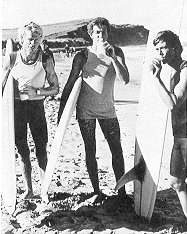
finalist May, Northern Beaches, Sydney (Long Reef, ) , 1st Keith Paull, also Nat Young, Ted Spencer, Midget Farrelly, Robert Coneneely, Lester Brien. Junior : Wayne Lynch, Held over several rounds. Image Left : Three finalists, Midget Farrelly, Nat Young and Ted Spencer, ethusiastically gulp down the sponsor's product - Milk. From Margan and Finney, page 226 Note not a Vee bottom in sight, but boards still to go sub 9 foot. Also note advaned fin placement on Ted Spencer's board. Also see Kim McKenzie's Hayden Surfboard shaped by Bob McTavish, 1968. |
 |
Midget
slides his pintail down
a good Warriewood wave.
Australian
Titles, Sydney, 1968.
Photograph by John Witzig. Surf International Volume 1 Number 7, June 1968, page 27. |
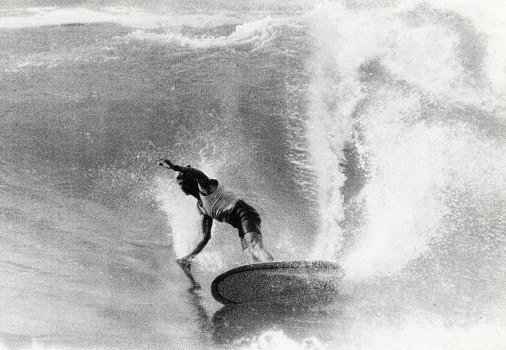 |
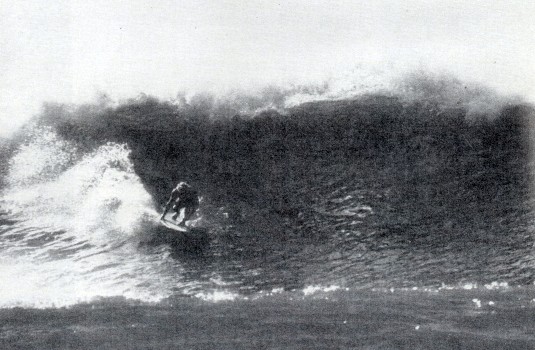 Surfing World Volume 10 Number 6, 1968, page 34. 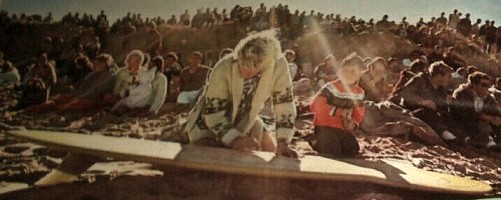 Midget waxes up his yellow pin-tail, Long Reef. EB (Everybody's Magazine) 12th June, 1968 : Surfboard Champ's 1968 Color Souvenir. |
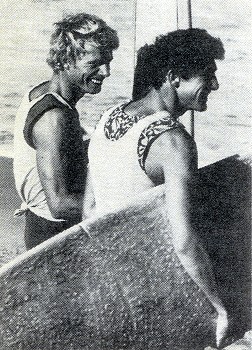 Midget and Nat, page 41. Photographs by Albert Falzon. 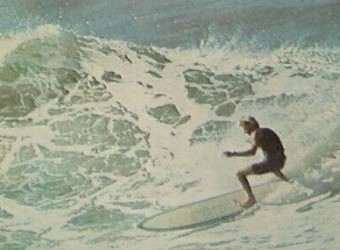 Midget, Warriewood? |
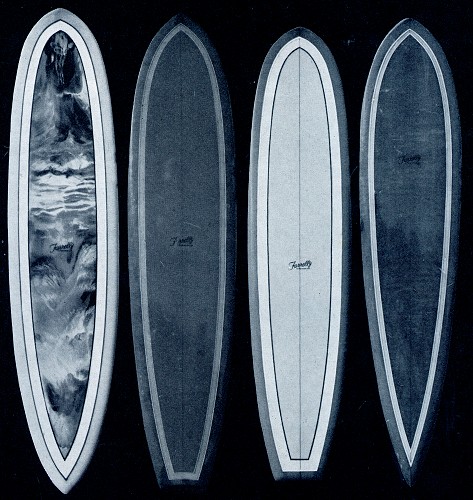
| Farrelly Surfboards
c/o Palm Beach Post Office, NSW, 2108. Phone: 919-5169 |
All
models are ultra-light and feature drag outlines and
hi-lo gun rails. Various tints and colour designs of distinction available. Fins, area through various stages of low resistance speed fins. Choice of hulls, flat or V. Interstate freight free. |
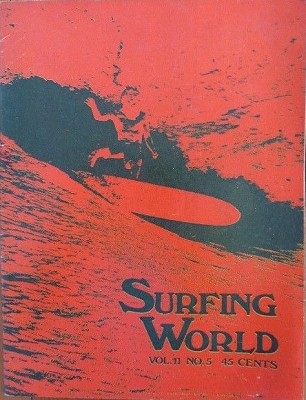 |
Surfing World v11 n5 Nov 1968 |
| 1968
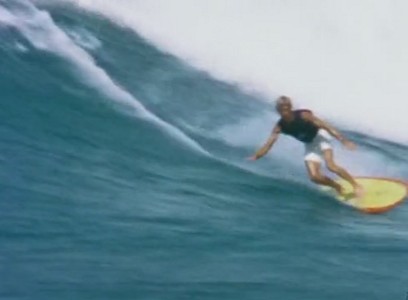
World Contest 2nd, Rincon, Puerto Rico , See Evolution, Part 7 1st Fred Hemmings (H), 2nd Midget Farrelly, 3rd Russell Hughes, 4th Nat Young, also Mike Doyle (USA) and Reno Abelleira (H). Midget rode a Pintail 7ft 10"?, Midget Farrelly Surfboards, Red bottom with Blue wing, Yellow deck, reportedly shaped and glassed at the G&S factory in San Diego. Image, left: Photograph by David Singletary Surfer magazine Vol 29 No 9 September 1988, page 124 |
 |
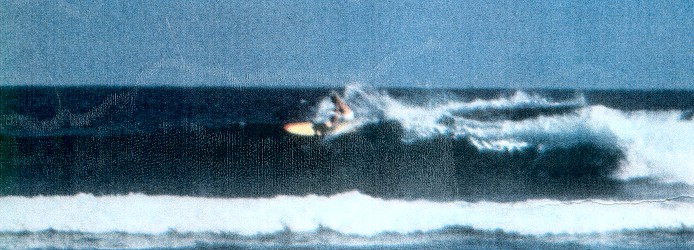 |
Rincon Puerto Rico, 1968. Photograph: Unaccredited Surf International
|
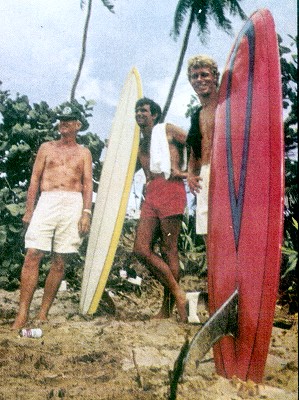 |
Midget Farrelly and others,
Pueto Rico, 1968. Surf International January 1969, Volume 2, Number 1, page 24.
|
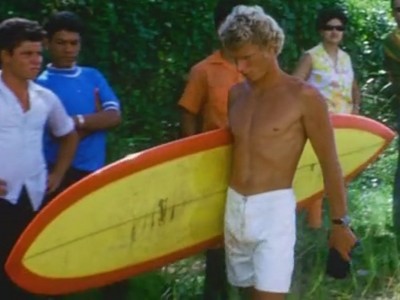 Midget
Farrelly pre-World contest final.
|
 |
 |
 |
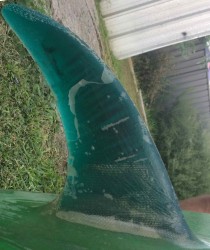
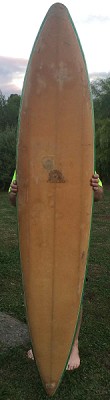
| 1969 Midget Farrelly Gun with hand-drawn decal? Sorry .. lost the contributor's details. 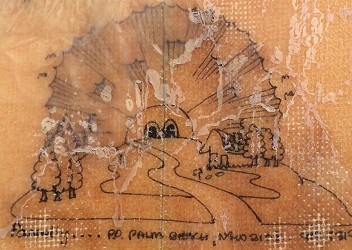 |
 |
 |
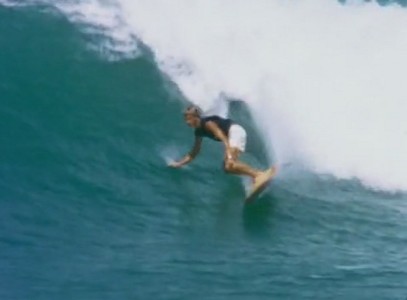
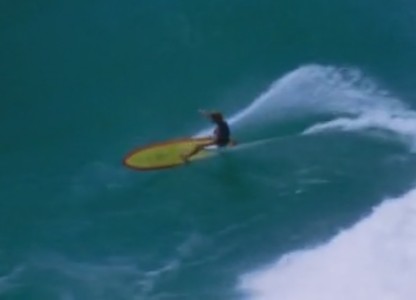
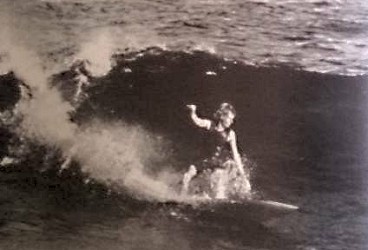 Midget Farrelly and needle-nose gun, Sydney, winter 1969. Surf International Volume 2 Number 3 page 14. |
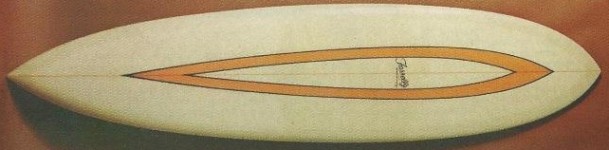 |
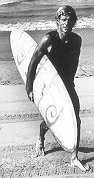
Midget Farrelly World
Contest Design for Gordon and Smith, California,
1969. Midget
Farrelly and Rounded
Pin,
Huntington Beach probably after 1968 World Contest. Further models for Gordon and Smith, California. Photograph : Leroy Grannis Carroll: The Next Wave, page 41. |
 |
|
1969
Duke Kahanamoku Surfing Classic
Haliewa, Sunset Beach Hawaii 1st Joey Cabell (H). No time element (?), movable contest site and 24 invited competitors. Scheduled to start on the 17th December, the contestants stayed at the Hilton Hawaiian Village Hotel, plus an expense account. The contest started the next day, 18th December, at Haliewa with a 12-15 foot north swell. Nat Young and Midget Farrelly were invitees. Midget turns from inside. Surfing World Volume 12 Number 1. Story by Randy Rarick. Photos by Peter French. |
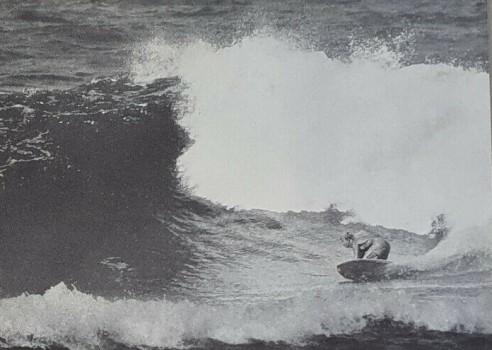 |
| Hawaii Winter
1969-1970 Surfing World Volume 13 Number 4 1970 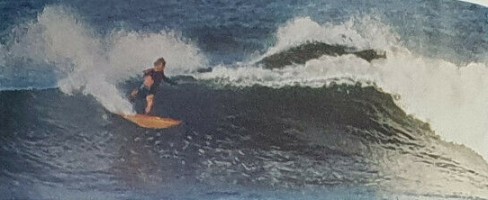 Page 17: Midget Farrelly Page 17: Midget Farrelly
|
 |
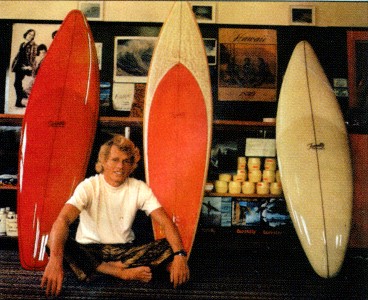 |
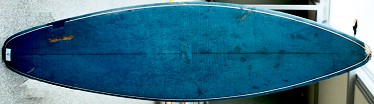
Surfing World Volume 13 Number 4 page 8, 1970 Note : The Volan deck patches and the red board on the left has a much wider tail than the two to the right. |
| 1970
Midget Farrelly : Hawaiian Surfers.
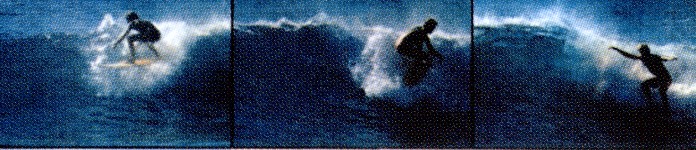
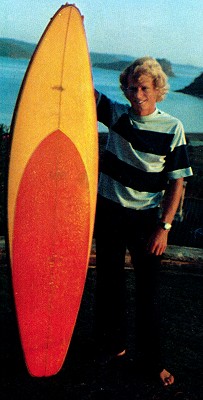
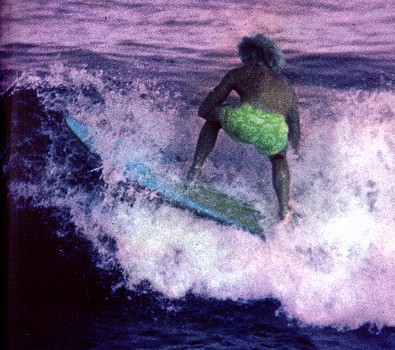
Surfing World, Volume 13 Number 5, circa June 1970? This edition also included a four page colour advertisement for Farrelly Surfboards, unprecedented for an Australian magazine of the period, further promoting the Side-slipper design, first announced in the previous edition, and a revolutionary fin box design. Page 39 (Advertisement, reformatted) 230 Harbord Road, Brookvale 2100, NSW, Phone 939-1724. The Side Slipper comes from Hawaii. It was designed to put the surfer back where the actIon IS, In the curl! Either by side-slipping or employing the 360 you can find your way back into the pocket. The Hawaiian (Aussi patriots and Downunder experts wince now!) Side Slipper would be slightly thinner and up to six inches longer than a conventional shortboard. Farrelly or his dealers can tell you how to achieve best results from a range of three fins that individually alter the Slippers performance. Should you prefer another design try one of Farrelly's Roundtails, Double Enders, Diamond or Square Tails, Big wave Boards, and even belly boards. |
 |
Pages
41-42 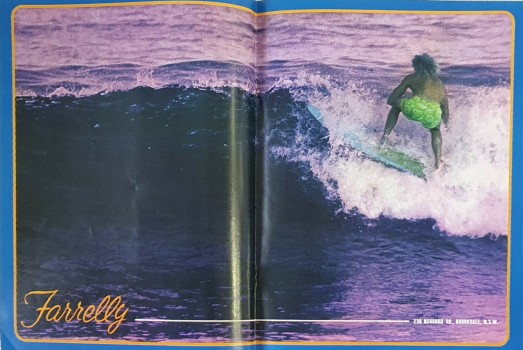 |
 |
| Page
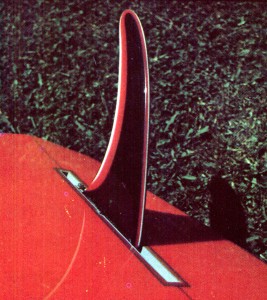
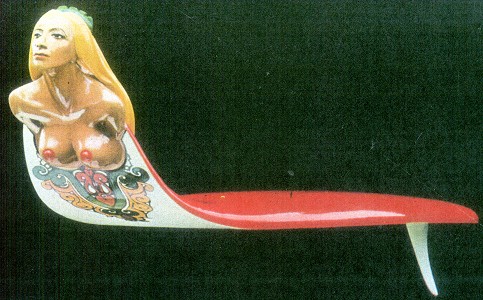
43 (Advertisement, continued, reformatted) 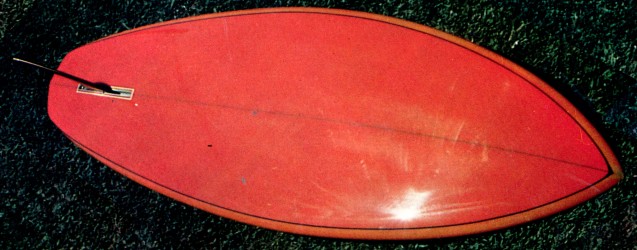 |
 |
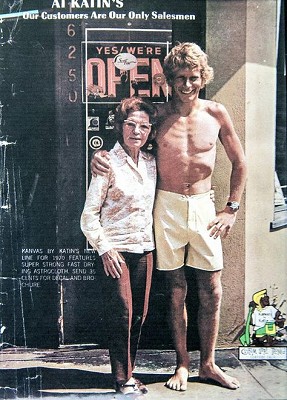
 Farrelly Surfboards Advertisement, circa 1970. Surf International Volume 3 Number 4, 1970, page 47. Midget
and Nancy Katin, circa 1970.
Ad for Kanvas by Katin boardshorts, Surfer 1970? |
 |
| 1970
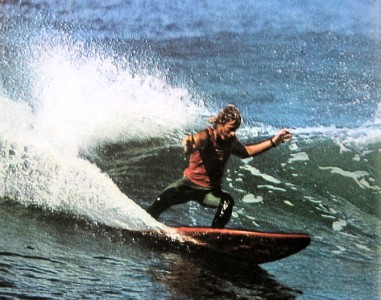
Bells Beach Contest Midget won his first two heats but failed to compete in his quarter-final Midget Farrelly cutback, Bells Beach Contest heats, 1970.
- Surf International, v3n1 1970. 1970 World Contest 2nd, Johanna Beach, Victoria, Australia 1st Rolf Aurness (USA), 2nd Midget Farrelly, 3rd Peter Drouyn, 4th Nat Young, 5th Reno Abellira and 6th Keone Downing (both Hawaii) See Sea of Joy, Part 6? Midget Farrelly rides a approximate 7 ft Side-slipper with Yellow bottom/clear deck with black pinlines, but like Reno Abellira on a similar board, surfs in the conventional manner or the day. |
 |
| Surfing
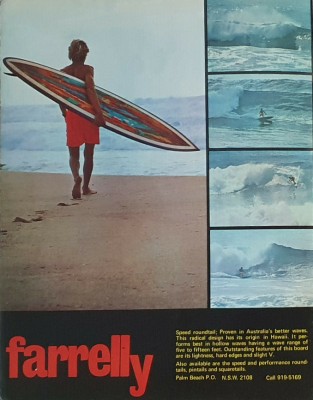
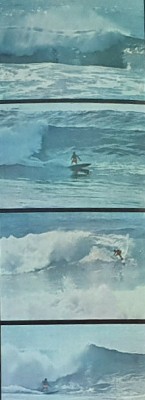
World Volume 12 Number 1 1969. farrelly Speed roundtail; Proven in Auitralia's better waves. This radical design has its origin in Hawaii. It performs best in hollow anes having a wave range of five to fifteen feet. Outstanding features of this board are its lightness, hard edges and slight V. Also available are the speed and performance round tails, pintails and squaretails. Palm Beach P.O. N.S.W.
2108
Call 910-5169
|
 |
 |
 |
 |
 |
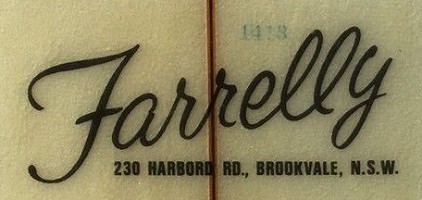
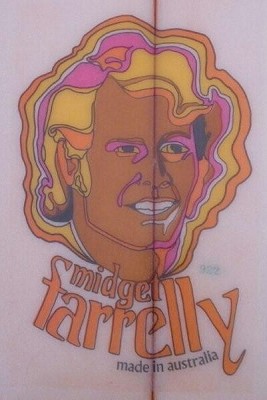
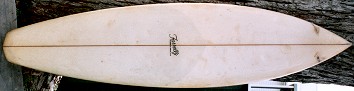  Decal #922 thanks to snazzy, January 2019. |
 |
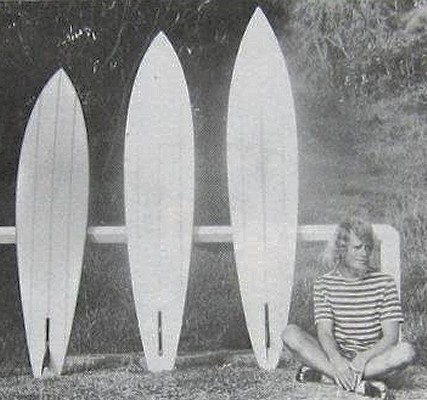
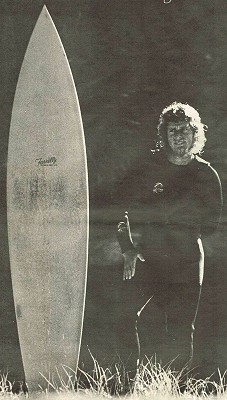
| 1971 Wetsuit board portrait by John Witzig. 1972 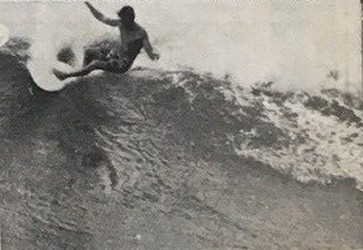 Tracks Number 17, page 26,
February 1972.
Extremely narrow speed guns by Midget, probably as narrow as boards went in this period, with triple stringers and finboxes. Midget Farrelly: Design Tracks Number 19, April 1972, page 31. |
 |
 |
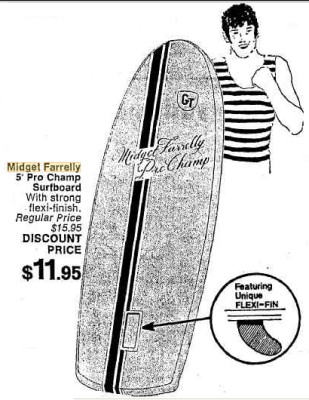
| CHRISTMAS
SUPRISES FROM TOYLAND ... Midget Farrelly 5' Pro Champ Surfboard With strong flexi-finish. Regular Price $15 95 DISCOUNT PRICE $11.95 SYDNEY WIDE discount stores ALBANY STREET, FYSHWICK 95-2277 Trove 1973 'Advertising', The Canberra Times (ACT : 1926 - 1995), 29 November, p. 4. , viewed 10 Aug 2016, http://nla.gov.au/nla.news-article131695124 |
 |
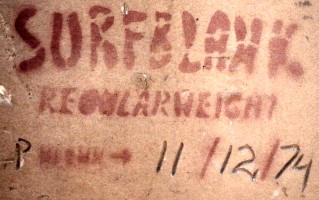 Surfblank Regular Weight 11-12-(19)74.
Image courtesy of Ken Grieves, July 2014 |
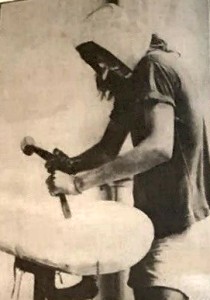
circa 1972 Midget Farrelly Sufboards leaves 230 Harbord Road, Brookvale and Surfblanks factory is established at: 7 Perak Street Mona Vale Phone : 997-2014 , 919-5319 Michelangelo with mallet
and chisel.
Tracks, Number 37, October 1973, page 2. Michelangelo (of mallet and chisel fame) has been doing some wood and glass fins with beautiful laminated colours. Surfing World January 1974 Volume 18 Number 6, page ? |
 |
| 1975 Retail sales at Number 1 Alexandria Street, Collaroy. Specific wave range performance is
Midget's speciality, the final interpretation of the
wave is yours.
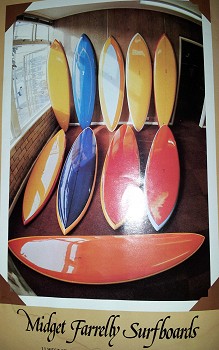
Saturday 10-12 am only. Call Surfblanks weekdays 997-2014 (Mona Vale), 919-5319 (Palm Beach?). Average price $120.00 SW January 1975 Volume 20 Number 4 Page 16? This issue also contains an article,with photographs,Shaping New Designs by Midget Farrelly, pages 14-19. Far right: Farrelly Surfboards Showroom, Collaroy. Surf Australia September 1977, Volume 1 Number 5 page? |
 |
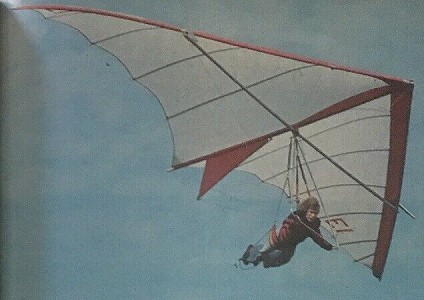 |
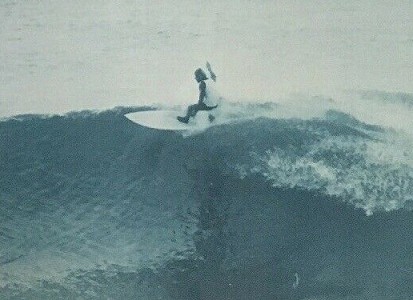
Midget
in full flight, hang-gliding and surfing. Photos: Core. Surf Australia February 1977 Number 2. See: Midget Farrelly : Hang-gliders and Surfboards. |
 |
| circa 1976- 7 Surfblanks factory and Midget Farrelly Sufboards moves to 11 West Street, Brookvale, Phone : 938-3220. Surf Australia (ed Steve Core), 1977 Volume 1, Number 5 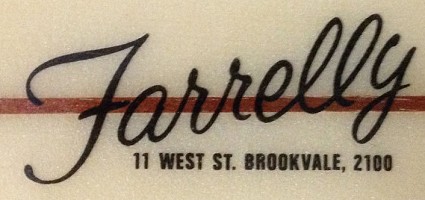 |
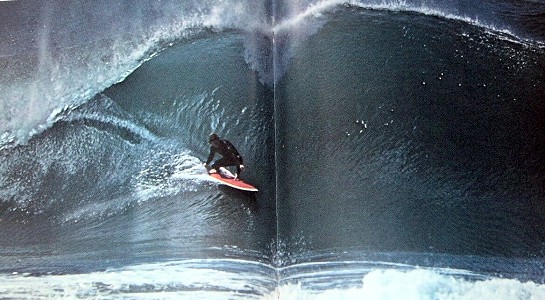 Midget (at Palm Beach?)
Photo by Hugh Mcleod, SW 1976 Volume 24
Number 3 pages?
|
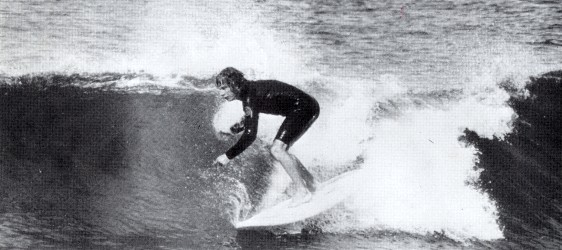 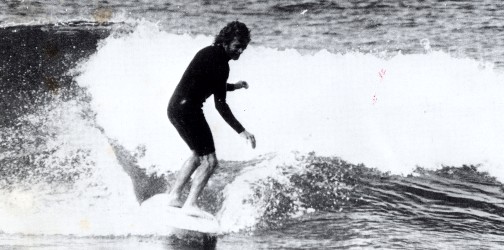 |
Midget testing a new Surfblank, 1976. That is a blank only with no glass and resin, and no fin. Dugan, Michael : Australian Fact Finders : Surfing, 1978, pages 10 and 12. First printed in a Surfblanks advertisement, Breakaway, August 1976, page 1? |
 |
 |
 |
Midget
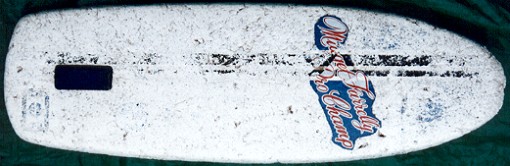
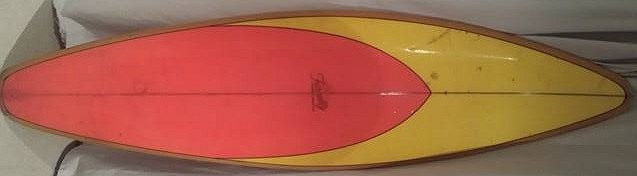
Farrelly Pro-Champ 4ft 10'' circa 1972 with rubber fin |
  |
Midget
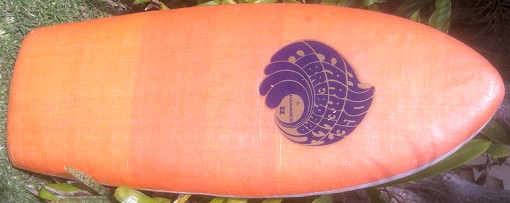
Farrelly Fibreboard by Hanimex circa 1986 fabric covered Photograph by Ken Grieves, March 2014.  Farrelly, 1990. |
Boards, Sand, Togs and Flags.
STARTING OUT: Bernard 'Midget' Farrelly
I WAS LIVING AT MANLY, round about 1955 or 1956, less than 100 yards or so from the beach ...During one of the many storms that occurred through the winter months ...surfboards would get washed out of the area underneath the surf dub where they were stacked... I picked up a battered long board, it was about 18 feet [5.5 m] [and] discovered that it either had no owner or the owner no longer wanted it ...I took it home, repaired it, got a set of wheels for wheeling it down to the surf, and I started surfing.
I rode those sort of [hollow, plywood] boards for the next couple of years ...' until I saw a visiting Hawaiian Olympic team come to Manly on short balsa boards ...10, 11 foot [3.3 m] balsa boards covered with fibreglass ...it was the '56 Olympics ...
Surfing
hadn't even begun other than in the surf dubs ...Around
about '58 or '59... I [became] a member of the Freshwater
Surf Club.
At that
stage balsa boards ...around about 10 feet [3 m] in length,
were well and truly established ...
I BOUGHT A BALSA BOARD KIT ...and built my first board while I was living in South Curl Curl... around about 1958 or '59 ...[Roger Kieran, at Beacon Hill, NSW, came] up with production balsa boards ...with the removable fin, and ...
Page 69
... fin-box system ... Roger sort of fiddled with anything-and-everything that looked like it might work... Some of the better [boardmakers] were Joe Larkin, who did cedar and ash, Bill Wallace, who did Pacific maple and ash and some other nice versions, Gordon Woods, Barry Bennett-and at that stage I think Greg McDonagh was probably fooling around with polystyrene, trying to do in polystyrene and epoxy what the Hawaiians had done in balsa and fibreglass ...
I started building surfboards completely on my own in 1964, up at Palm Beach, in a boatshed.
there were
two major influences in getting Australian surfing going ..
.
(1) was Bud
Brown's surfing movies.
And (2) was
the first two or three issues of the American Surfer
magazine ...a collection of stills and
written
material giving more depth to that sport and lifestyle.
It was this
strengthening of the sport and the lifestyle that ultimately
led surfers away from the surf club.
Page 70
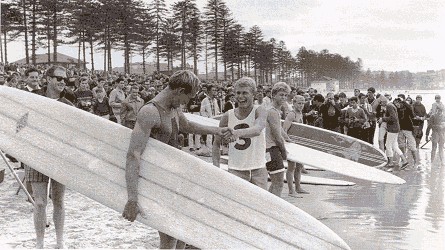 |
Midget Farrelly and other competitors, Australian Championships or World Contest, Manly, 1964. |
I ENTERED THE [1962] MAKAHA CONTEST and most of the other Australians were eliminated .., And it came down to the final day, where the surf was relatively small... The waves were around six feet [1.83 m] maximum, averaging about four feet, and I happened to come further inside... I sort of cut the course in half, so to speak... I just moved inside and caught more rise in a wave that came along ...
There
happened to be three Californian judges on the stand at the
time ...
The fact
that they appreciated small waves ...combined with the fact
that I had an ability to ride small waves, probably made the
result come out the way it did .., The uproar caused by a
non-Hawaiian winning that event was completely unbelievable
...The newspapers in Honolulu at that time carried [such]
headlines .,. as 'Hawaiian Surfing Prestige Wiped Out.'
I actually
had the odd Hawaiian chasing me ...
I came back
to Australia after the Makaha contest and the event had sort
of caused a small ripple here, but it sort of ...grew...
Australia was a very different .I country then ...[which]
looked down on itself, but got pride out of any winning that
any individuals or teams could achieve.
So it took a
while for .., people to realise that an Australian had
actually won something... and the newspapers made a small
sensation out of it.
And
ironically about that time the popularity of surfing as
something other than a sport-surfing as a sub-culture or a
lifestyle-took off.
The
Californian experience [was] that once you had this formula
of beach, .. waves, music, clothes, cars, language- you had
an explosive sort of situation.
And the same
thing occurred here .., it just took off.
Page 71
FROM SURF CLUBS TO SURFABOUT
SURF CLUBS
WERE FAIRLY REGIMENTED in their beach sport. [Lifesavers]
marched in a line, they carried reels in a line, they
carried flags in a line, they'd pull a boat down the beach
in a disciplined way- and surfers were the opposite.
They were
nonconformists, and they surfed when the waves were good,
and they were doing it as individuals, not as teams, and the
surf clubs saw themselves threatened ...
They tried
banning [surfboard riding] at beaches, they tried
registering boards.
Surfers were
branded as dangerous in and out of the water: 'louts,
hooligans' ... trying to hit people with their boards... I
think the most disgusting incident I saw was local councils
registering surfboards in the belief that they could control
them on behalf of the surf clubs and protect the public,
when in actual fact it was a revenue-raising exercise which
ultimately became self-defeating
People
refused to register their surfboards... Today, surfers still
prize the old registration stickers- just, you know, to show
young people what the coundls and the surf clubs of the time
had in mind ...and how people were actually so afraid of
surfing ...
The sport
at that time had sort of enjoyed a kind of a strong,
relatively healthy image.
We had
...gone through the "surfer/rocker war" newspaper
sensationalism period ...But it [was to change fairly
dramatically.
Round about
the time of Flower Power and LSD and the San Francisco
experience, there was a ...major influence brought to bear
...by people who were attempting to establish themselves as
gurus of the sport ... Anybody who doubts [this] should go
and see The Fantastic Plastic Machine, because
everything that ever went wrong with surfing is captured in
that movie... at one stage it was said that ...
Page 72
... if you weren't into dope you didn't know what you were doing in the waves ... Anybody young in surfing was automatically pressured to get into dope as well ...The end results were relatively catastrophic, and the history of surfing is quite perverted through that period, and much of the material written about surfing during that period is quite nonsensical.
Meanwhile, in the background, surfing was still sort of clicking away as the ... natural sport it always was and always will be- a wave, a surfboard and a human and the world contests were still being run, and luckily the dope culture began to separate out [from it] ...
Much was made of the so-called birth of the modern style of surfing through 1966 onwards, but in reality it was a fabrication by a small group of individuals seeking to exert influence over... the sport at the time... All of the theories proposed ultimately fell by the wayside in competition ...
So, as
surfing got into the seventies, a lot of the young guys who
didn't like dope sub-culture lifestyle nonsense ...said,
'Well, this is not what we want.
We want
surfing as the sport we've always loved ...and we want to
turn it into a ...fairly honourable thing again, and we'd
like to maybe make a living doing it.
And through
the efforts of people like Mark Warren ...like Graham
Cassidy and the people that helped him, surfers of that
period wanted to recapture the feeling of the early '60s,
when surfing was a sort of vibrant, exciting sport-
healthy... a rewarding, just-to-be-in-it sort of thing.
And through
the establishment of the Surfabout Contest... surfing was
sort re-born in the public's image, and the professionalism
that evolved ...has ... continued since that time.
Page 73
DESIGNING
BOARDS
[DUKE
KAHANAMOKU] used a heavy, solid wood board here all those
years ago.
I've ...seen
that board many times; it's not a board I'd like to ride.
The hollow
racing-style surf club boards which could still wave ride
were made very light, but basically only men were supposed
to use them.
They were
14, 16, 18-feet [4.27-5.5 m] long ...
Balsa
boards that are around 10-feet [3 m] were the breakthrough.
A girl could
carry one of those-and that's when the possibilities of all
people surfing really arose... By the time the urethane foam
boards came along, the weight of a surfboard had been
reduced, say, from the early days from ...100 pounds [45 kg]
down to something like 15 pounds [seven kg]
and less.
And many
people experimented with shape and construction-and not all
of the changes that occurred can be credited to any single
individual.
It was
mostly a 'suck-and-see' approach all the way down the line
..
As
surfboards supposedly progressed and got smaller and
smaller, more fins were attached - basically... for mobility
of the wave.
Like
dancing, surfing changed.
It appeared
to be simple at first and then it became complex and then it
became specialised - 'til today the modem surfboard can only
be ridden by a very light person or a very athletic person,
and the surfboard manufacturing industry has actually
painted itself into a comer which it is now desperately
trying to get out of, because there aren't enough small,
light, physically-aggressive people to buy them.
So we went from single fins, to twins, to tris, to quads to- I even have a five-fin that works nicely on bigger waves... It's actually the balance of the board on the wave that counts, ...
Page 74
... and
single-fin balance doesn't compare with the twin-fin balance
...and a penta- fin doesn't compare.
It's all a
balance that can be achieved by reducing the size of each
fin and its position on the board, and it is the rider who
sort of understands this best.
When the
board is locked into a wave by one fin, it has that feeling
of being locked in.
When a board
is held onto the wave face by a variety of small fins, it'
is only barely held onto the wave face, so the board is
actually skating around ... a more fluid, spontaneous,
creative style of surfing is achieved... quite delightful
for the eye to watch ...
The good
thing about the phase that surfing is going into now is that
the variety of surfing equipment is so broad and so
interesting ...everybody has a son or a daughter who surfs
...We are achieving a sort of physical fitness through the
sport having arrived at its present stage, from those first
visits by
the Duke
...it has ...fitted into everyday Australian life.
I THINK
THAT ANY SURFING BREAK is ideal, provided that you can get
what you want out of it.
I learnt to
ride in bad waves, because I sharpened my reflexes in bad
waves.
When I had
to learn to ride big waves I had to go to Hawaii.
When I had
to learn to ride long, easy, soft, gentle waves I went to
Queensland.
But I don't
have any preference - I think variety is the important
thing.
Likewise
...with your surfing stock-you have to keep changing to stay
interested ...
If I was
going to teach somebody to surf, basically all I would say
to them is:
'Well, there
is the wave.
This is the
board that suits that wave-and you, all you have to do, is
get what you want out of that wave.
If you only
want to ride it laying down, then do that ...If you want to
become a high-performance, professional-style competitor,
you've got to work hard at a great variety of manoeuvres and
become a total athlete.'
| home | catalogue | history | references | appendix |