surfresearch.com.au
glossary : l
| home | catalogue | history | references | appendix |
|
surfresearch.com.au
glossary : l
|
|
|
|
|
|
|
|
|
|
|
|
|
|
|
|
|
|
|
|
|
|
|
|
|
|
|
|
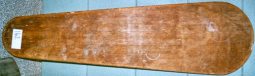
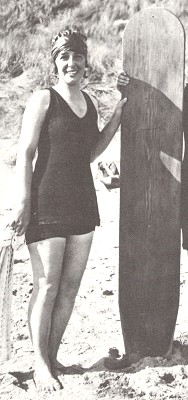
| Lamaroo a solid timber board for prone surfing, the term appears to be particular to Victoria. In use in some form from the earliest records of Australian surfing Later a fibreglassed balsa wood belly-board, commonly with two D fins, circa 1950’s. Image Left : Grace Smith Wooton and Win Harrison Point Lonsdale Victoria, circa 1915. from Wells page 157 The board was made by a local carpenter, cost 12 shillings ($1.20), with her initials carved in one end.
|
 |
| Lam
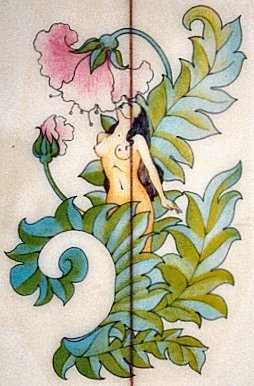
Art laminated art, i.e. decals. Also see: Shane Egan. http://www.bluebananastudios.com/shane-egan-art |
 |
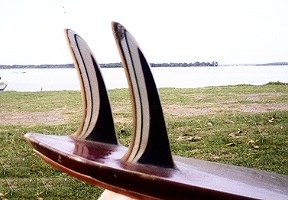
| laminated fin :
a fin constructed of multi-layered fibreglass cloth, often using different layers of pigment colour to assist foiling and/or for décor effect. Laminate could also include decals, art work, fabric or fully enclose a wooden fin. |
 |
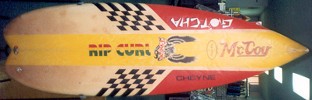
| Lazor Zap : no-nose, wide tailed single fin board designed by Geoff McCoy for Cheyne Horan, 1979-1984. Later models featured Ben Lexan/Cheyne Horan’s Winged Keel/Star fin. Reprised 1998 as Thruster finned Nugget model by McCoy Surfboards. |
 |
| leg-rope -
leash - cord - kook cord As far as I know, the surf leash was introduced at the Santa Cruz 4A Invitational in the Spring (May?) of 1971 by Pat O'Neill and Roger Adams. Probably the idea was around before that, but the first photo of the leash in action was published that year, and the first retail ads were run by a company called Surf Strap. The leash got off to a slow start, and ran into some bad press. First of all it was ugly : a line of shot cord fastened to the nose of a surfboard with a suction cup. Holding the cord in your hand, you could jerk the nose around to produce a truly ugly manouvre. The purists were appalled. The more competitive surfers saw the practical advantages and opted for the leash early. For kids starting out...the was no question about it. - Drew Kampion : As Years Roll By (1970's Retrospective) Surfing February 1980. Volume 16 Number 2, page 43. French
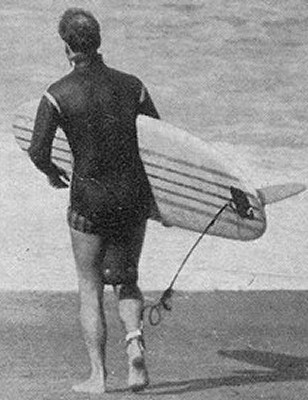
surfer with leg-rope, published March 1966 in Surfing World.
The first commercial design was a cord attached to the nose of the board by a suction cup and to the rider’s wrist, by Control Products (USA) circa 1972. Advertised illustration indicated the rider could direct the board via the attachment. |
 |
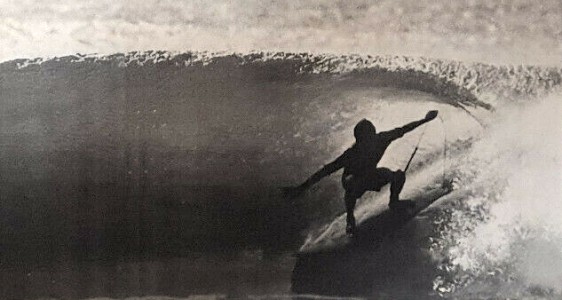
| Page 3 Contents/Letters Features a goofy-foot on a hollow right hander holding a leg-rope with his trailing hand. |
 |
 |
Surfer
Volume
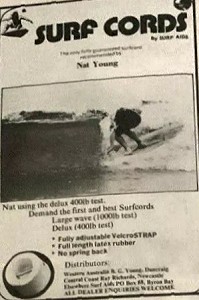
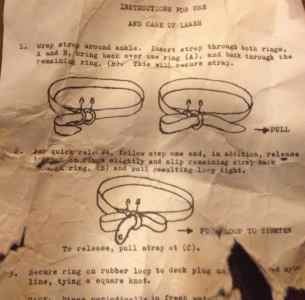
14 Number 3, September 1973. Page 85: Pipeline. SURFIN' AROUND Con (Colburn's Control Products) also reports that Jim Blears and George Downing rode 15' point Makaha with Con's ankle leash unit with no sweat! Possibly a first for a leash in really big surf. Second commercial product, Surf Ankle Leash, attached to rear of the fin, USA December 1973. Surf Aids Surf Cords Recommended by Nat Young Fully adjustable Velcro strap - Full length latex rubber - No spring back. Note circular deck plug. Tracks Number 50 November 1974, page 36. |
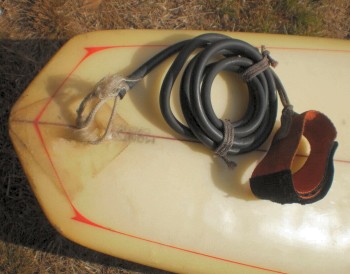 Rubber
and rope core leg-rope and fibreglass
loop, Cyclone Surfboards, 1974 |
 |
 |
 |
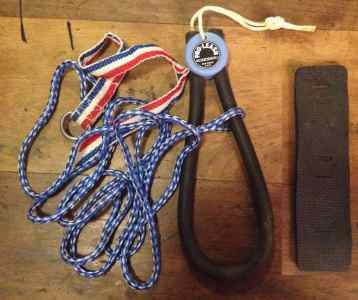
Later, a rovings bridge (leash loop) was laminated onto the rear deck as an alternative to the hole in the fin, a method in current use on thin tailed boards or on pre 1975 boards to maintain historical authenticity (they can easily be removed)
A further alternative was cutting a hole in the deck of the board forward of the fin and inserting a plastic moulded chair leg stopper and a metal bar.
Circa 1974, first commercial models
by Bob Newlands at Surf Aids, Byron Bay NSW, greatly improved
safety by using Velcro ankle attachment, brass swivel and a
flexible cord (surgical tubing with rope insert) attached to a
moluded plug fitted to the deck (packaged as a full kit with the
plug for fitting post-manufacture).
Fixing the attachment forward of the
fin/s improved safety by redirecting recoil.
Surfing (USA) Volume ? Number ? October-November 1974 cover included Leash Test.
|
During this period many
manufacturers only fitted plugs to new boards on
request, and some refused to. 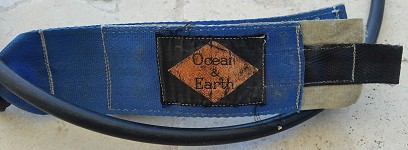 Ocean and Earth Velcro Strap, 1975. In 1975 a plug was marketed
with in-built swivel, but this double swivel version
would soon be unnecessary. 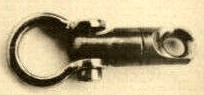  By the 1980s, a swivel was incorporated into most leg-ropes. In California, Clarke Foam introduced the Surf Leash Bolt in 1977. A standard fin bolt with an eyelet at the top to attach a leash or leg-rope. With the rope attached under the board, this was semi-practical in the US where removable fins had the tab at the rear of the fin. In Australia, the tab was invariably at the front of the fin. 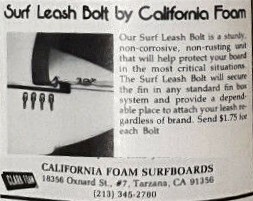 International Surfing
Volume 12 Number 3, June-July
1976, page 14.
In 1977 Ian Cairns insisted
on a leg-rope free final at the Alan Oke Memorial
Contest, Phillip Island Victoria. In the early 1980’s the rope/tubing design was replaced with a solid moulded urethane cord. Boogie boards commonly use a curled moulded urethane cord with wrist attachment. A long-board or Malibu leg-rope features a large Velco attachment to be worn bellow the rear knee, to facilitate walking. Despite being a safety feature, leg rope use has been possibly been responsible for some casualties. Graeme Attey noted by email, June 2009:"I ... designed the over-moulded legrope system for Creatures of Leisure in 1994 (now used on every legrope in the world today) and then the ‘Revolution’ leg-rope swivel system introduced in 2003." The universal adoption of the leg rope has had a significant impact on surfboard construction and design, surfing performance and crowds. Also see: Jock Serong’s Short History of The Legrope https://www.coastalwatch.com/surfing/13810/jock-serong-s-short-history-of-the-legrope Sydney Morning Herald: All surfers will lose control of their board': lawyers target longboarders without leg ropes, March 2019. www.smh.com.au/national/all-surfers-will-lose-control-of-their-board-lawyers-target-longboarders-without-leg-ropes-20190301-p51133.html 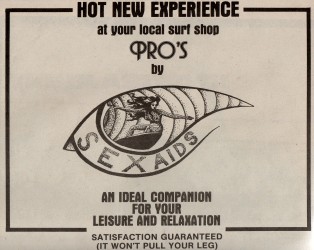
Advertisement for (Sex)
Surf Aids Leg-ropes, Byron Bay?
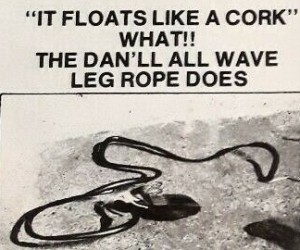
Daniell
All Wave Legropes.
Tracks, October 1979, page 26. Surfboard Materials P/L, 168 Waterloo Street, Narrrabeen. A$ 9, A$ 8
without the plug .
Tracks, August 1976,
page 36.
|
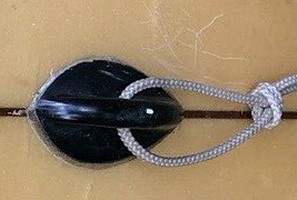 Adhesive leg-rope plug, 1975. Blue Cheer Surfboards, California. 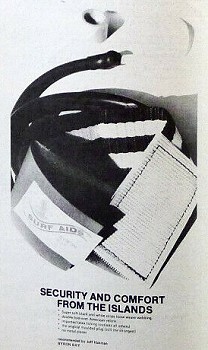 Surf
Aids Leg-rope and
Plug.
Tracks Number 72, page 12. September 1976 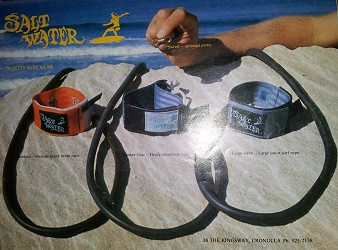 Surf
[Aust]
November 1977
Volume 1 Number 6. |
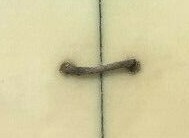 Inserted
rope strap
to attach leg-rope. Kennett Surfboards, 1973. |
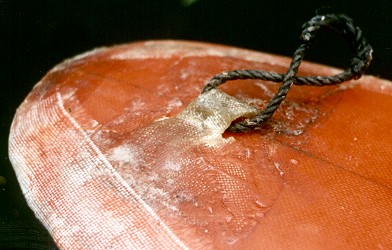
|
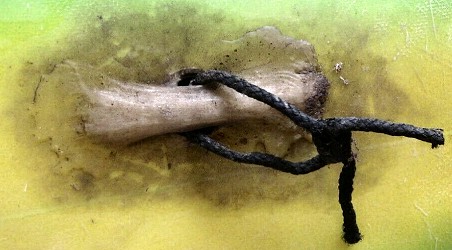
Crude
cloth and resin leg rope bridge,1974 Amateur
rovings and resin leg rope bridge, 1974.
Jackson Surfboard |
 |
| Little Red 8ft 4" x 23" stringered rounded pintail. Shaped by Ted Spencer and Bob McTavish at Keyo Surfboards, mid 1967. Despite the publcity given to Nat Young and Bob McTavish's testing of the Short Board/Vee-Bottom theory in Hawaii, November-December 1967, variations of Ted Spencer's board were to be the dominant design in Australia for the next twelve months. The board is featured in Eric Blum The Fantastic Plastic Machine - Windansea contest October 1967,. and Paul Witzig : Hot Generation - Maui. |
 Bob McTavish & Little
Red,
Honolua Bay, Maui, December 1967. Photo : John Witzig |
|
|
|
|
|
|
|
|
|
|
|
|
|
|
|
|
|
|
|
|
|
|
|
|
|
|
|
| home | catalogue | history | references | appendix |