 |
surfresearch.com.au
surfing
images : 1870 to 1890
|
surfing images : 1870 to 1890.
| home | catalogue | history | references | appendix |
|
surfresearch.com.au
surfing
images : 1870 to 1890
|
|
|
|
|
|
|
 |
 |
|
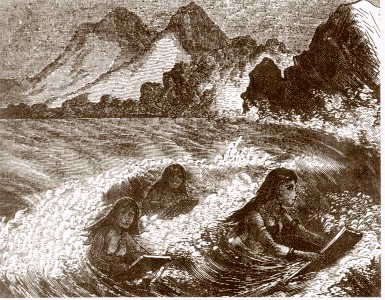
Surf-bathing Success, 1872. DelaVega (ed, 2004) Page 29. |
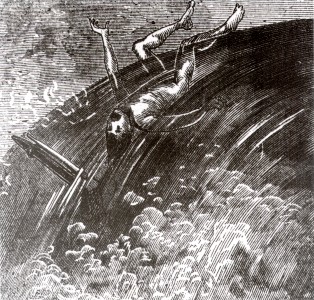
Surf-bathing Failure, 1872. DelaVega (ed, 2004) Page 29. |
Illustrating
Roughing
It
http://etext.lib.virginia.edu/railton/roughingit/illus/riillhp.html
"I will
write
a book that will sell like fury," MT wrote Bliss in August
1870, "provided
you put pictures enough in it."
When
published
in February 1872, Roughing It contained 304 pictures.
Less than
three quarters of that total, however, were originally
intended for MT's
book, and when it wound up selling fewer copies than he'd
expected, the
illustrations were the first thing MT blamed.
The
pictures
were drawn by perhaps as many as a dozen different
artists.
As
Beverly
David tells the story in Mark Twain and His Illustrators,
Bliss initially
hired Edward F. Mullen, whom MT had recommended in 1870
for his Burlesque
Autobiography; Mullen's "E.F.M." is visible on about half
a dozen illustrations.
When
illustrating
began in the summer of 1871, anxieties about Mullen's
reliability led Bliss
back to True Williams, the principal illustrator for
Innocents Abroad;
the majority of signed illustrations in Roughing It have
Williams' "TW"
on them.
MT's
lateness
in sending in manuscript and reports of Williams' drinking
then prompted
Bliss to commission additional pictures from Roswell Morse
Shurtleff.
You'll
also
see the name "Richardson" on several illustrations; he was
an engraver
-- the artist behind the pictures with his name of them
was Henry Stephens.
Stephens's drawings, however, were originally drawn for an entirely different book: another of Bliss' publications called Beyond the Mississippi, by Albert Richardson (1869).
Excerpt from Roughing
It - Finney
and
Houston (1966) Appendix D Pages 100 - 101.
DelaVega
(ed, 2004) Page 29.
Various resized
and/or cropped versions are also printed in
| Finney and Houston (1966) Page ?? | Finney and Houston (1996) Page 61. |
| Margan and Finney (1971) Page 24. |
|
Surf-bathing Failure, 1872. DelaVega
(ed, 2004)
|
DelaVega
(ed, 2004) Page 29.
Various resized
and/or cropped versions are also printed in
| Finney and Houston (1966) Page ?? | Lueras (1984) Page 51. |
| Margan and Finney (1971) Page 22. | Finney and Houston (1996) Page 60. |
 |
Bainbridge Hoff : "Surf Bathing, circa 1873." Knox
(1888)
Considered
an unrealistic
representation by
|
The California
made two trips to Hawaii in 1871-1872 and 1872-1873.
Bainbridge Hoff
may have been on either or both visits, but I can find no
record of his
service or rank for this period.
The
first 'California', a screw sloop, was launched 3 July
1867 as 'Minnetonka'
at Portsmouth Navy Yard; sponsored by Miss M. Bailey;
renamed 'California'
on 15 May 1869; and commissioned 12 December 1870, Captain
J. M. B. Glitz
in command.
As
flagship
for Rear Admiral J. A. Winslow, commanding the Pacific
Fleet, she steamed
from Mare Island Navy Yard 28 November 1871 for a cruise
to Honolulu, Hawaii;
Valparaiso, Chile; and Panama, Colombia, putting back into
San Francisco
13 November 1872.
On
'California's'
second cruise, 30 December 1872 to 25 May 1873, she flew
the flag of Rear
Admiral A. M. Pennock, commanding the North Pacific
Station, and sailed
to Honolulu to supervise the protection of American
interests in the then
independent island group.
http://www.history.navy.mil/danfs/c1/california-i.htm
Other
illustrations
by Com. William Bainbridge Hoff
Sketch by
William Bainbridge Hoff : Stranding and capture of USS
Philadelphia, 31
October 1803
It
depicts
Philadelphia under attack by gunboats off Tripoli, after
she ran aground
on uncharted rocks while chasing a small enemy vessel.
Photo #:
NH
56734
U.S. Naval
Historical
Center Photograph.
http://www.history.navy.mil/photos/events/barb-war/capt-phl.htm
Books by Com. William Bainbridge Hoff
Bainbridge-Hoff,
William
(Commander U S Navy) :
Examples,
Conclusions,
and Maxims of Modern Naval Tactics.
Griffin,
Portsmouth.
1885
Bainbridge-Hoff,
William
: Elementary Naval Tactics (1894)
John
Wiley
& Sons, New York. 1894,
Photograph of
Com.
William Bainbridge Hoff
USS
Ossipee (1862-1891)
"General
Muster"
on board, circa 1887-88.
The
ship's
Commanding Officer, Commander William Bainbridge Hoff, is
in center, leaning
on the grating rack.
Note
Marine
sentry at the gangway, hammock stowage, and large
percentage of black sailors
among the crew at left.
http://www.history.navy.mil/photos/sh-usn/usnsh-o/ossipee.htm
William Bainbridge Hoff came from a family with strong naval traditions, the grandson of William Bainbridge..
"Congressional
Gold
Medal Recipient William Bainbridge
William
Bainbridge
was born in Princeton, New Jersey, on 7 May 1774. He went
to sea in the
merchant marine in 1789 and was captain of a ship before
reaching the age
of twenty.
Bainbridge
was
commissioned as a Lieutenant in the U.S. Navy in August
1798.
...
Commodore
Bainbridge was commander of Navy forces afloat at Boston
for much of the
rest of the decade, and in 1820-21 flew his flag in the
ship of the line
Columbus during another Mediterranean cruise.
He was
later
Commandant of the Boston Navy Yard, served as a Naval
Commissioner in 1825-1828
and then was Commandant of the Philadelphia Navy Yard.
Bainbridge returned
to the Boston command in 1832,"
http://www.congressionalgoldmedal.com/WilliamBainbridge.htm
This web page
also
includes details of four USNavy ships named 'Bainbridge'.
For further
William
Bainbridge biography, see
http://www.history.navy.mil/photos/pers-us/uspers-b/w-bainbg.htm
First printing
in
Nordhoff,
Charles
: "Hawaii Dei"
Harper's New
Monthly Magazine, August 1873, Pages 382 to 402 (?).
Credited as
"Woodblock by Commander William Bainbridge Hoff (of the
flagship California)."
The image and
the
article, without a credit, were reprinted in
Nordhoff,
Charles
: Northern California, Oregon and the Sandwich Islands
Harpers and
Brothers,
New York, 1874. Pages ?
The image,
without
a credit, was subsequently printed in
Knox,
Thomas W :The Boy Travellers in
Australasia. (1888)
Harper
&
Brothers, New York. 1889. Page 32.
Note the
publishers
are the same as Nordhoff and they probably sourced the image
fom the previous
publication.
The scanned image is from Knox (1888) Page 32.
Various
resized and/or
cropped versions are also printed in
DelaVega
(ed, 2004) Page 24.
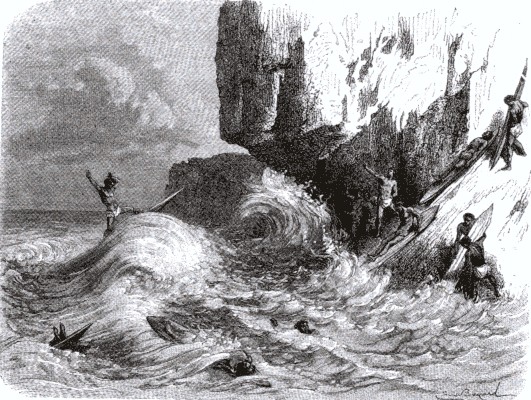 |
"Jeux Havaiens" (Hawaiians playing), circa 1873. DelaVega
(ed, 2004)
Probably reconstructed from reports or sketches. |
The artist may
have
also access to previously published images, unpublished
sketches or highly
improbably, photographs.
There are some
similarities
with Howard (1830),
particually
the attire.
The side
pespective
is unique, the wave detail possibly influenced by Japanese
woodblock prints.
See The
Wave in Art.
The steepness
of
the beach and the significant backwash do not confirm to what
modern surf-riders
would normally regard as suitable surf conditions, especially
for boards
of this length.
The boards
dimensions
are approximately 9 feet long and 18 inches wide.
The image
appears
to only indicate the nose profiles, and these do not
correspond with any
other images , or indeed with any known examples.
Similar nose
profiles
did not appear in common surfboard design until the 1930s.
The weight of
the
boards is indicated by the two riders lifting the board,
right.
The image is
as dominated
by the dramatic cliff-face as much as the surf-riders.
Although the
riders
positioning is unfortunate, this is typical of many images of
this period.
The image
records community activity and possibly off-shore winds.
It is unclear
whether
the two riders onshore are merely watching the action, or
possibly sliding
down the beach into the water.
"Emile
Bayard
(1837-1891) - French illustrator
Emile
Bayard
was born in La Ferté-sous-Jouarre in 1837.
Cogniet's
pupil, he published cartoons in newspapers since he was
only 15, sometimes
under the pen name of Abel de Miray.
He made
several
drawings on wood using graphite.
Emile
Bayard
drew also posters and boards.
As
illustator,
he never used photographic documents and always tried to
have a meeting
with the author.
The real
success
of illustration should be that the reader, just by looking
at the paintings,
understands the book.
Bayard
made
some drawings on current events, such as Victor Hugo's
death.
He
actively
collaborated with "Bibliotèque des merveilles", published
by Hachette.
He died
in
Cairo in 1891.
Works
illustrated
by Emile Bayard :
Alphonse
Daudet
: Immortel, 51 illustrations.
Hector
Malot
: Sans famille, Hetzel.
Comtesse
de
Ségur : L'enfant du guide, Hachette, 60
illustrations.
Harriet
Beecher-Stowe
: La Case de l'oncle Tom
(Uncle Tom's Cabin)
Jules
Verne
: From the Earth to the Moon, Hetzel."
- http://www.ricochet-jeunes.org/eng/biblio/illus/bayard.html
First recorded
printing
in
de Varigny,
Charles
: "Voyage
Aux Iles
Sandwich (Iles Havai)"
Le Tour du
Monde
(A French magazine) Volume II, 1873, Page 224.
Maybe in
de Varigny,
Charles
:
Le tour du
monde.
Nouveau journal des voyages, illustré par nos plus célèbres
artistes.
8ème année,
1er et 2e semestre. En 2 volumes.
Paris,
Hachette,
1867
or
de Varigny,
Charles
: Voyage de l'Océan pacifique à l'Océan atlantique,
à travers l'Amérique du sud
??? details
Scanned image
from
DelaVega
(ed, 2004) Page17.
Various resized
and/or cropped versions are also printed in
Finney
and
Houston (1996) Page 20
Margan
and
Finney (1971) Page 14.
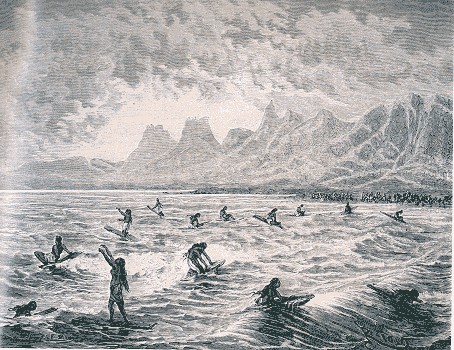 |
"Jeux Havaiens" (Hawaiians playing), circa 1873. Lueras
(1984)
Probably
reconstructed
from reports
|
"Edouard
Riou
(1833-1900) is the first and undoubtedly the most
recognized illustrator
of Verne’s Voyages Extraordinaires.
He
illustrated
Verne’s earliest and most famous novels, including Cinq
semaines en ballon,
Voyage au centre de la terre, (#19), Les Voyages et
aventures du capitaine
Hatteras, Les Enfants du capitaine Grant [The Children of
Captain Grant,
In Search of the Castaways], as well as the first eleven
chapters of Vingt
mille lieues sous les mers (the remaining chapters were
done by Alphonse
de Neuville).
Before
and
after his association with Hetzel, Riou specialized for
many years in landscape
painting and commemorative pieces (the opening of the Suez
Canal, the marriage
of the Russian tsar’s daughter, etc.).
A student
of the famous French artists Daubigny and Gustave Doré, he
was very
well known in France during the 1850s, 60s, and 70s, and
he contributed
illustrations to a wide variety of French books and
popular magazines throughout
this period—e.g., Dumas’ Le Comte de Monte-Cristo, Scott’s
Ivanhoe and
Waverley, Hugo’s Notre Dame de Paris and periodicals like
Tour du monde,
Illustrated Times, and La Chronique illustrée. "
- Arthur B.
Evans
: The Illustrators of Jules Verne’s Voyages Extraordinaires
SCIENCE-FICTION
STUDIES,
XXV:2 (July 1998): 241-70.
http://jv.gilead.org.il/evans/illustr/
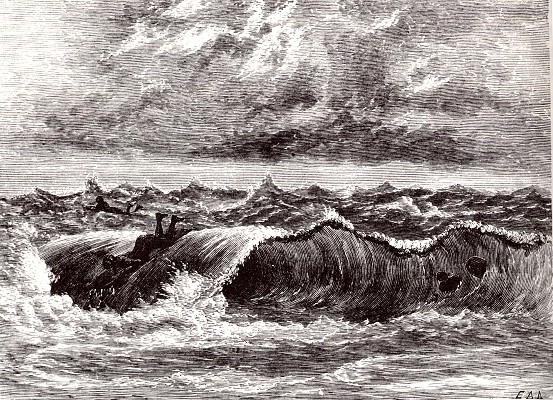
Edouard Riou: A huge wave, (forty feet high, overwhelmed the
fugitives with a terrible roar. Men and beasts, everything,
disappeared in a whirlpool of foam. A ponderous liquid mass
engulfed them in its furious tide.)
Jules Verne: In Search of the Castaways
J. B. Lippincott & Co., Philadelphia , 1873. First US edition
The original French edition of “In Search of the Castaways” was
published by Hetzel in 1867-1868 as “Les Enfants du Capitaine
Grant” (The Children of Captain Grant). It included 170 engravings
by Edouard Riou which are also present in this 1873
English-language edition.
http://jv.gilead.org.il/rpaul/Les enfants du capitaine Grant/
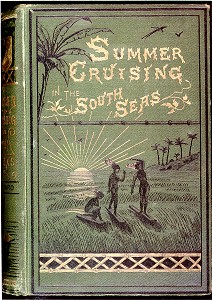 |
Summer Cruising in the South Seas, 1874. Cover illustration, probably by Wallis McKay. See below. First book with a surf-riding illustration on the cover. Lueras (1984) Page 50. |
Lueras
(1984) Page 50.
Also Dela
Vega (ed, 2004) page 28.
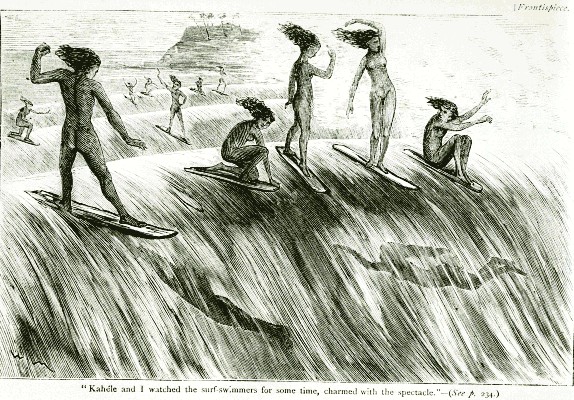 |
circa 1874. Lueras (1984) Page 36. Highly detailed image denoting riding positions, stance, duck-diving, waves in sets, off-shore winds and significant wave height. |
Highly
detailed image
denoting riding positions, stance, duck-diving, waves in sets,
off-shore
winds and significant wave height.
...
'Punch'
and its Irish version, 'Zozimus' (which employed Wallis
Mackay as its chief
cartoonist).
http://www.chrisbeetles.com/pictures/artists/Furniss_Harry/Furniss_Harry.htm
Zozimus
The
Irish equivalent of Punch, with many humorous stories.
Issues
&
Index Sources: 1870 – 1872
Frequency:
weekly
http://www.philsp.com/data/data359.html
Finney
and
Houston (1996) Page 36.
Various resized
and/or cropped versions are also printed in
Kampion
(1997) Page 30.
Dela
Vega (ed, 2004) Page 31.
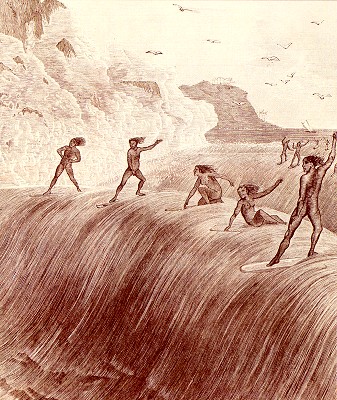 |
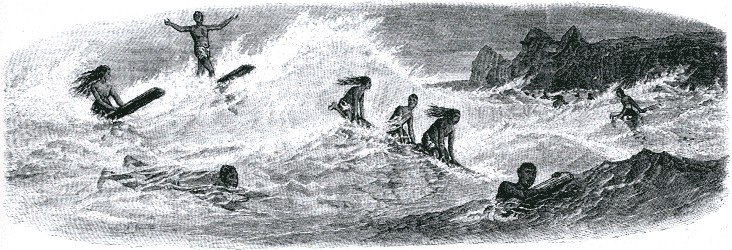
Nat's
History (1983) Page 30
Highly
detailed image
denoting
|
A highly
detailed
image denoting riding positions, stance, duck-diving, waves in
sets, off-shore
winds and significant wave height.
...
'Punch'
and its Irish version, 'Zozimus' (which employed Wallis
Mackay as its chief
cartoonist).
http://www.chrisbeetles.com/pictures/artists/Furniss_Harry/Furniss_Harry.htm
Zozimus
The
Irish equivalent of Punch, with many humorous stories.
Issues
&
Index Sources: 1870 – 1872
Frequency:
weekly
http://www.philsp.com/data/data359.html
First printed
in
Wood, John
George
(1827-1889) : The Uncivilized Races of Men in all
Countries of
the World : Being a comprehensive account of their manners
and customs,
and of their physical, social, mental, moral and religious
characteristics.
G. Routledge
and
Sons, London. 1868-80 2 Vol.Pages 168 to169.
Nat's
History (1983) Page 30.
Various resized
and/or cropped versions are also printed in
Finney
and
Houston (1966) Plate 10.
Margan
and
Finney (1971) Page 18.
Lueras
(1984) Page 36.
Finney
and
Houston (1996) Page 36.
Dela
Vega (ed, 2004) Page 30.
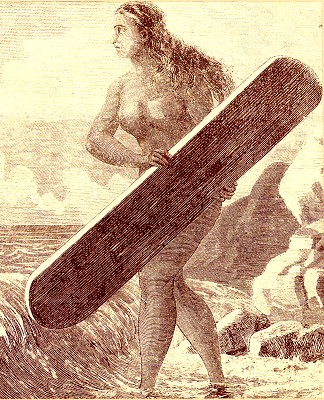 |
Wahine and surfboard, circa 1875. Nat's History (1983) Page 18. Possibly cropped. |
HUNTING/FOX
HUNTING/COLOUR
- 'SKETCHES IN THE HUNTING FIELD NO. II - THE RIVALS'.
This
splendid Double Page, which appeared in THE GRAPHIC
in 1879, depicts
ladies riding side-saddle. It was issued in Colour and
drawn by J. Charlton.
http://www.antiquemapsandprints.com/ILN-SUBJECTS.htm
The image was
reprinted
in the German magazine
Illustrite
Welt
1887. Volume XXVI.: "Das baben in der Branbung"
Page
56.
The whole
article
was reprinted in
Leslie's Illustrated Weekly
"King Kalakaua at Home" 23
January
1883. Pages 333 - 334.
Scanned image from
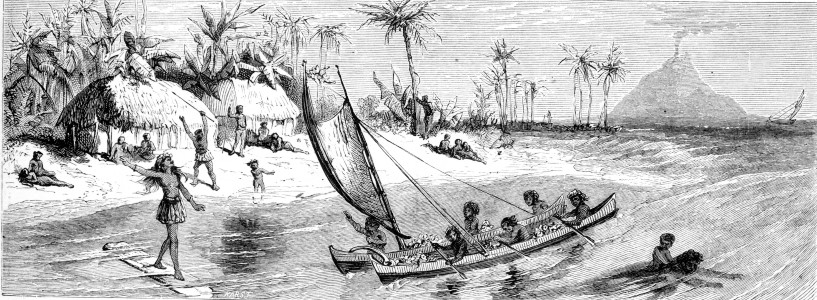 |
Scene in Polynesia. in Swinton, William: Grammar School Geography Ivison, Blakeman, Taylor, and Company New York and Chicago, 1881, page 105. |
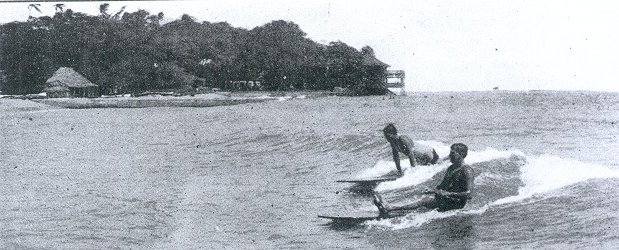 |
Mirrored version. in Kahanamoku, Duke Paoa: Riding the Surfboard. The Mid-Pacific Magazine Alexander Hume Ford, Honolulu, Territory of Hawaii, Volume 1, Number 1, January,1911, page 7. |
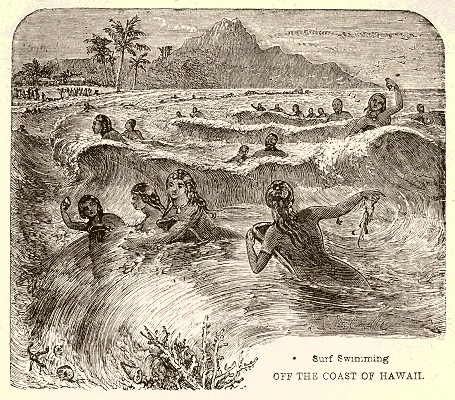 |
Surf Swimming off the Coast of Hawaii. Woodcut and design by Harden S. Melville. Engraved by Newsom Woods. Greenwood(1885) page 96.
|
The image is
probably
not based on observation, and is most likely a copy of "Surf
swimming
at Hawaii, Sandwich Islands." Leslie's
Illustrated
Weely, New York Arkell Weekly Co. 7 April 1866. Page 37.
See above.
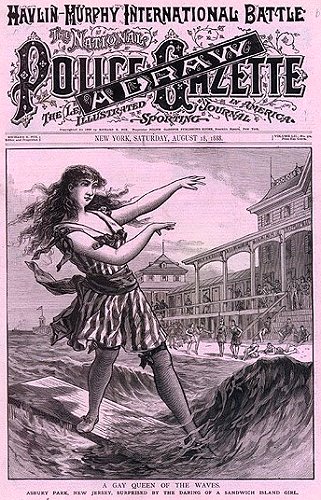 |
Extract from National Police Gazette August 18, 1888, pages 1 and 14. |
|
|
|
|
|
|
| home | catalogue | history | references | appendix |