surfresearch.com.au
surfing images :
photography, 1890 to 1930
| home | catalogue | history | references | appendix |
|
surfresearch.com.au
surfing images :
photography, 1890 to 1930
|
|
|
|
|
|
 |
 |

| Robert Louis
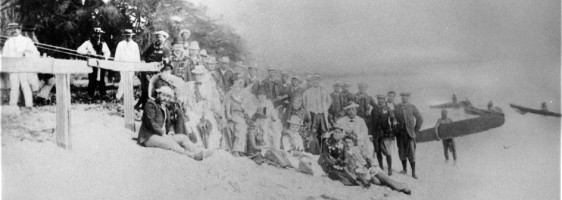
Stevenson: Diamond Head, Honolulu, 1889. Knight, Alanna (ed.): R.L.S. in the South Seas Mainstream Publishing, Edinburgh, 1986, page 91. ... we sighted Hawaii ... The swell was the heaviest I have every been out in - I tried in vain to estimate the height, at least fifteen feet - came tearing after us about a point and a half off the wind. (February 1989) |
 |
|
Dr.
Henry Bolton:
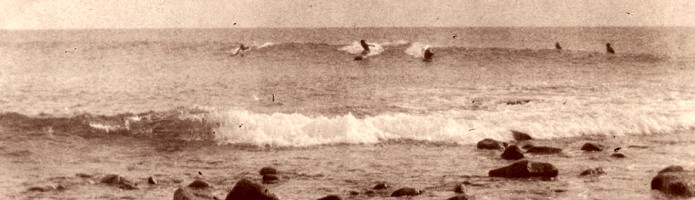
Surf Riders, Niihau, 1890. The
second of three photographs:
before they entered the water; while surf-riding, and after they came out. |
 |
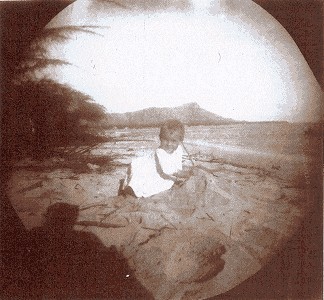 |
(Kodak photograph) Reproduced in Frizot,
Michael (ed) : A New History of Photography.
|
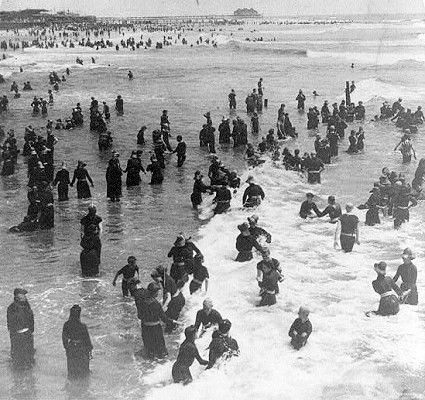 |
A Delightful Surf, Atlantic City, N.J., U.S.A., circa 19 October 1891. http://hdl.loc.gov/loc.pnp/cph.3b05367 This
photograph illustrates the popularity of
surf-bathing |
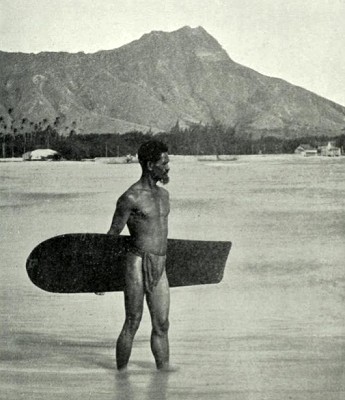 |
[cropped] Printed
in The traditional malo (loincloth) was possibly a prop to enhance authenticity. The
book also includes |
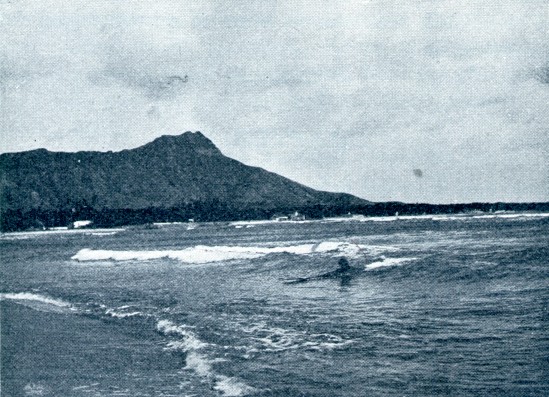 |
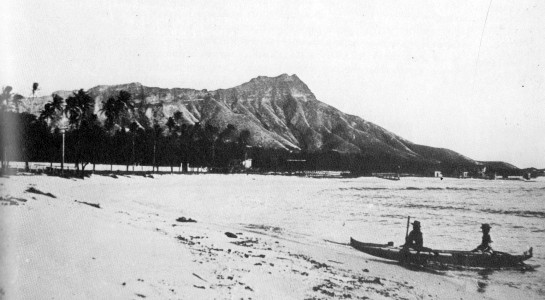
Diamond Head, circa 1893. Printed
in A
prone surf rider on a fairly long board in the
This
is possibly the same surfer and board in the
|
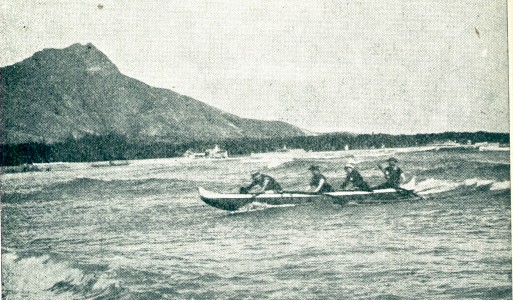 |
Canoe Surf Riding at Waikiki, 1896. This
photograph, along with two illustrations,
accompanied Thrum,
Thomas G. (editor) : For
the illustrations, see: |
| Native Hawaiians surf riders in
double-hulled canoes, Waikiki, Honolulu, 1898. Young, Lucien The Boston at Hawaii, Gibson Bros, 1898, page 86. wiki commons https://commons.wikimedia.org/wiki/File:Surf-Riding,_Waikiki,_Honolulu_1898.jpg |
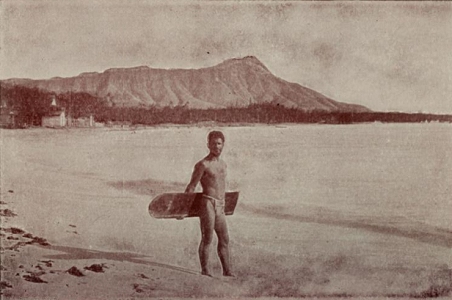 |
Native with Surf Board, Waikiki Beach, circa 1898. One
of several similar board portaits from the period,
Tim DeLaVega accredits this to Frank Davey, one of
several known to be taken of Charles Kauha with his
surfboard at Waikiki in April 1898. The
traditional malo was possibly a prop to
enhance authenticity. First
published in |
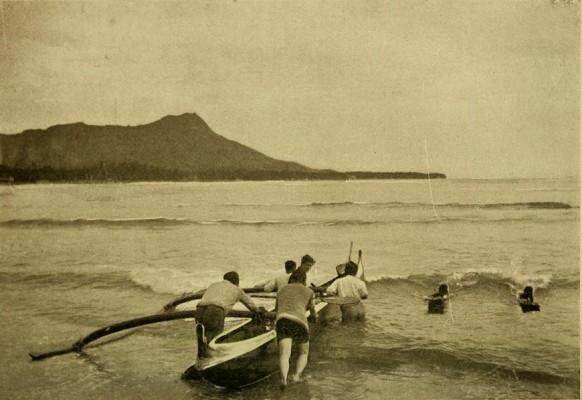 |
Juvenile Surfboard Riders, Waikiki, 1899. Published
in |
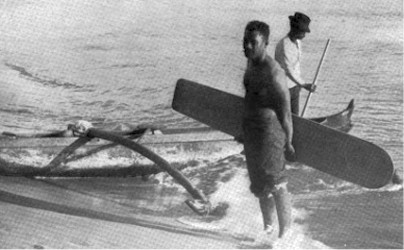 |
This board portrait was published in Olivares,
José de: Identified by Herve Magnificat and posted on the Surf Blurb, 24 April 2013. |
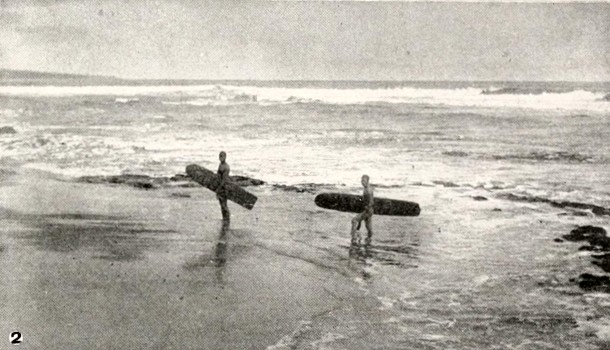 |
Showing the shape and size of the board, Hilo, Hawaii, circa 1900. Printed
in This is remarkably similar, but not identical, to a photograph said to be circa 1900, and published as a postcard by the Hilo Drug Company before 1907. See below, and DeLaVega: Surfing Hawai'i (2011) page 33. |
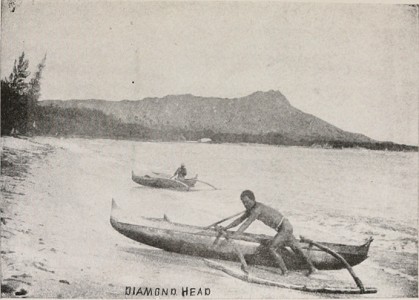 |
Waikiki Beach Diamond Head in the background. McMahon, P. Maurice: From Fair Hawaiiland; Poems by P. Maurice McMahon. Mercantile Printing Co., Honolulu, [1900?] Facing page 4. Hathi Trust https://hdl.handle.net/2027/uc2.ark:/13960/t2t43nf2z |
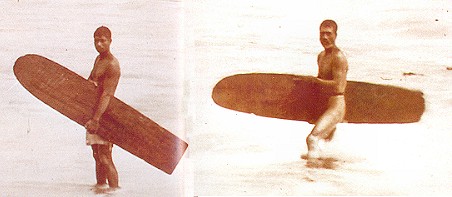 |
Surf Riders, Hilo Bay, Hawaii, circa 1900. Detail from a quality reproduction. Note
that the surfer to the left is wearing shorts,
|
| Boys With Surf Boards Indulging
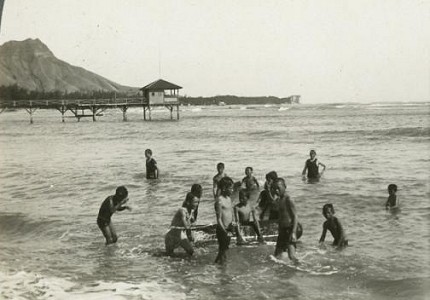
in Their Favorite Sport on Beach at Waikiki near Honolulu, Hawaii, circa 1900. 10162 T - T 361 Keystone View Company Meadville, Pa; New York, NY; Chicago, Ill; London, England. Stereo images for viewfinder. 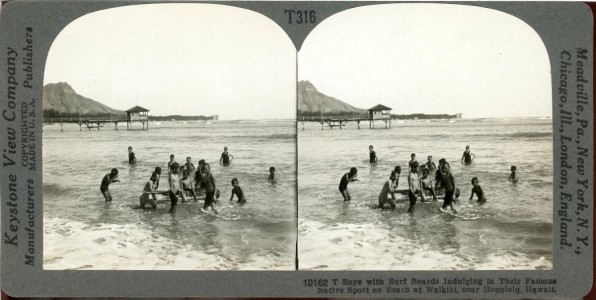 |
 |
|
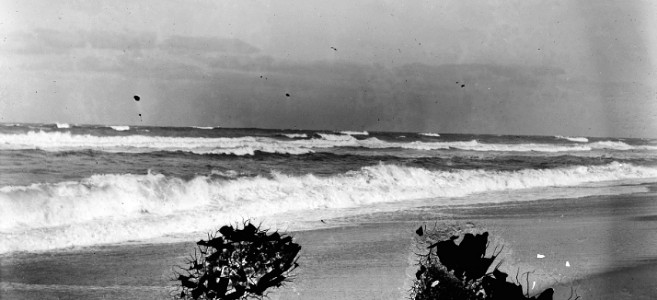
Wilbur and Orville Wright: Surf at Kitty Hawk, North Carolina, circa 1900. https://www.loc.gov/item/2001696448/ |
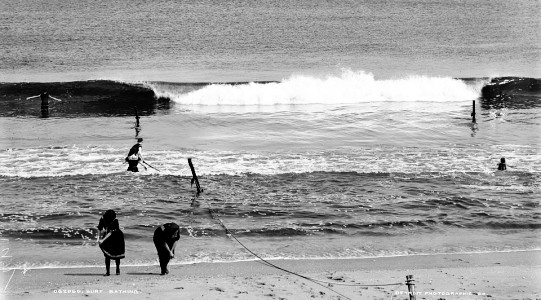 |
Detroit Publishing Co: Surf Bathing [between 1890 and 1910]
|
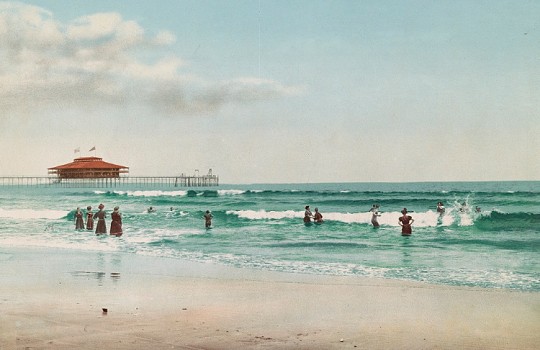 |
Detroit Photographic Co. In the surf at Old Orchard, Maine, c1901. Detroit Publishing Co., no. 53686. In album prepared by Detroit Photographic Co. to use as a catalog in its office. Digital file from intermediary roll film. https://www.loc.gov/item/det1994000149/PP/ |
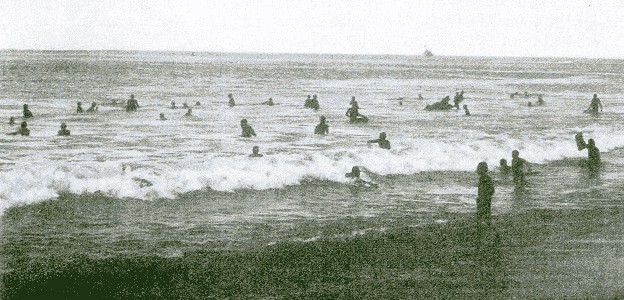 |
[Wave play] Das Wellenengleitspiel (Fa'ase'e), Samoa, 1902. Printed
in |
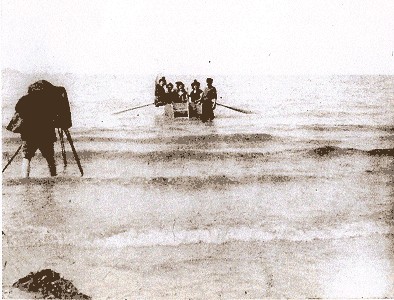 |
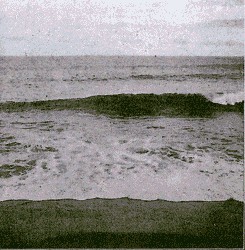
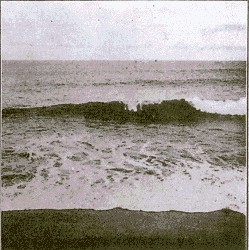
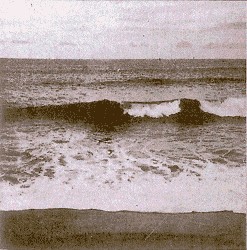
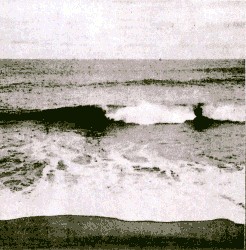
"Sea side Photographer, circa 1900." Stereoscopic
View, Private collection. Below (from page 253): Albert Londe :"Wave, from in front, 1903." A
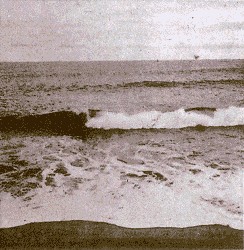
six shot sequence of a small right-hand wave,
location unknown, |
 1. 1. |
 2. 2. |
 3. 3. |
 4. 4. |
 5. 5. |
 6. 6. |
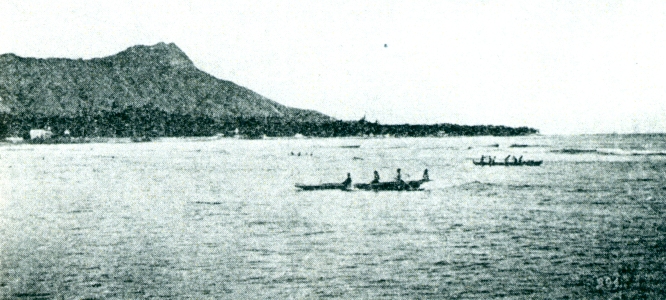 |
Diamond Head and Surf Boats, 1903. This photograph was printed in a basic tourist promotional booklet. Bishop,
Dr. Sereno E.: |
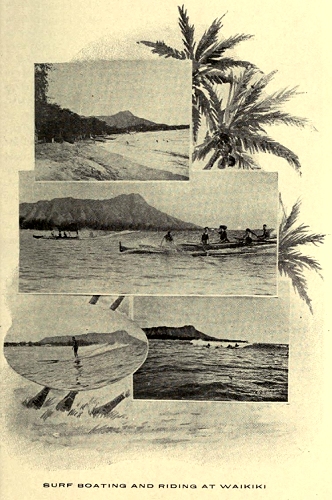 |
Surf Boating and Riding at Waikiki, 1904. (Page design by Julian Greenwood.) Published
in Three
important early surf riding photographs illustrating
canoe surfing Both
surfboard riding photographs were later produced
as The
standing surfer image was widely reproduced in
The photographs are displayed individually, below.
|
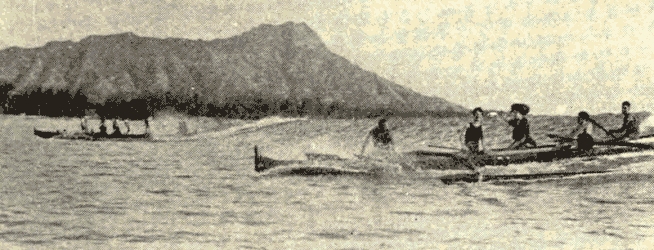 |
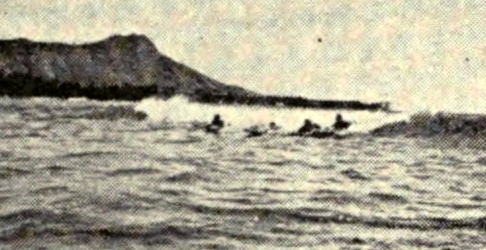
Surf Boating, 1904. Later
reproduced in the Outrigger Canoe
|
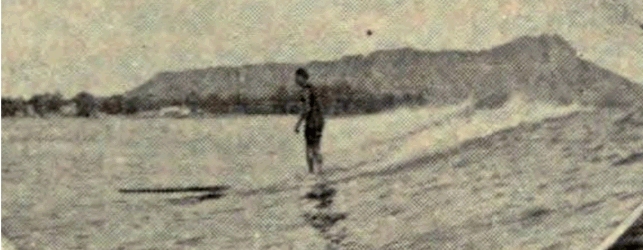 |
Surf Riding, 1904. Later
produced as a hand-tinted postcard,
|
 |
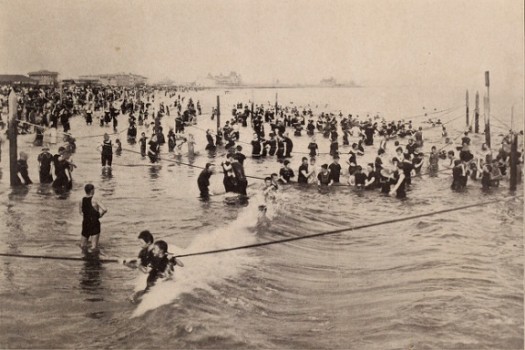
Prone Surf Riding, 1904. Later produced as a hand-tinted postcard. |
 |
Bathing Scene,
Coney Island, 1904.
Isaac H. Blanchard
Co.
Glimpses of the new Coney Island : America's most popular pleasure resort; reproduced from best and latest photographs. Isaac H. Blanchard Co. 268-270 Canal Street, New York, c.1904, [page 8]. |
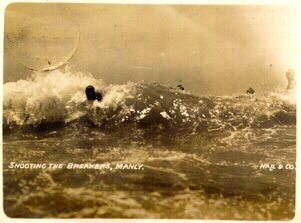 |
Shooting the Breakers, Manly, circa 1905. Hall & Co. Postcard. Body
surfing at Manly Beach, circa 1905. |
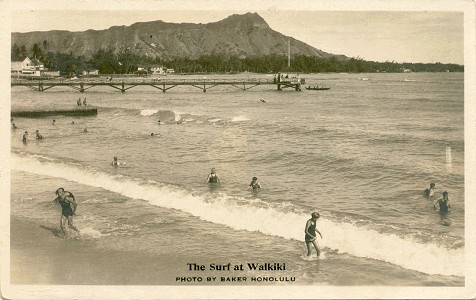 |
The Surf at Waikiki, circa 1905. Postcard. Surfboard
riders are in evidence |
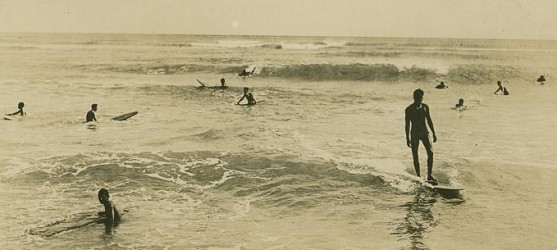 |
Unaccredited : Riding the surf at Waikiki, [1905] Identified by Patrick Moser, January 2016. New York Library http://digitalcollections.nypl.org/items/510d47e3-dc4c-a3d9-e040-e00a18064a99 |
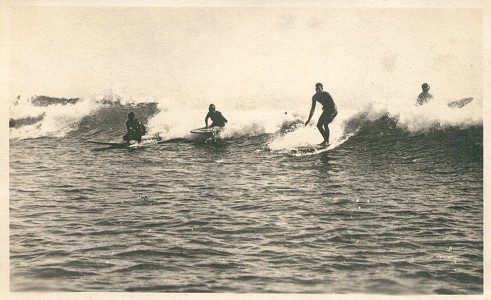 |
Surf Riders at Waikiki, circa 1905. Real photograph, undivided back. Inscribed
in pencil: |
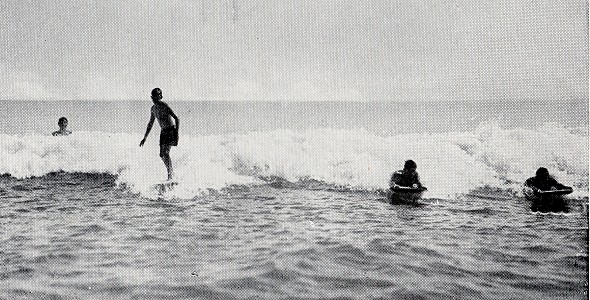 |
Unaccredited : Surf Riding at Waikiki, Honolulu, circa 1906. Printed in Coffee, Frank: Forty Years on the Pacific Oceanic Publishing Company, New York, Sydney, 1925, facing page 76. |
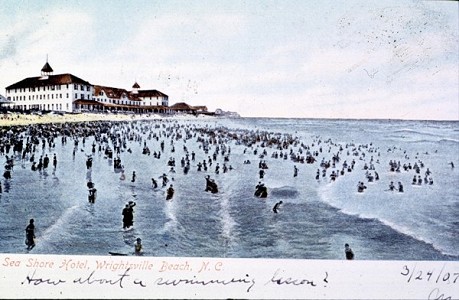 |
Prone-board
surfer.
Sea Shore Hotel, Wrightsville Beach, N.C. How about a swimming lesson? 3/27/07 Skipper
Funderburg identified the prone-board
surfer
in the bottom right of this postcard in 2010. Post card image courtesy of New Hanover Public Library, Robert M. Fales Collection. Also see: Funderburg, Joseph. Surfing on the Cape Fear Coast SlapDash Publishing, Carolina Beach, 2008. |
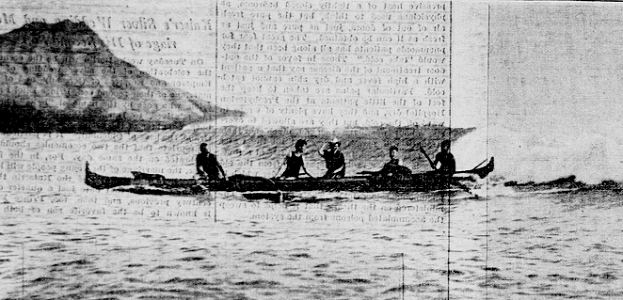 |
Riding the Surf at Waikiki, 1906. Printed
in Similar
to Rice and Perkins: Surf Boating,
See:
|
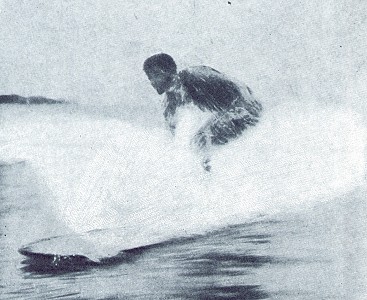 |
George Freeth, Spinning in on a Swift One, 1907. As
accredited when published in The
photograph accompanies an article by Ford extolling
the surfing skills However,
in Surfing
Hawaii (2011) page 48, Tim DeLaVega
It is also likely that the surfrider is not Freeth. |
 |
Surfboard Rider, California, circa 1907. L. M. Robin: The Joys of Surf-riding. The Stand Magazine [American edition] International News Co., New York Volume 38.Number 225, October, 1909 Hathi Trust https://hdl.handle.net/2027/hvd.hn4li5 |
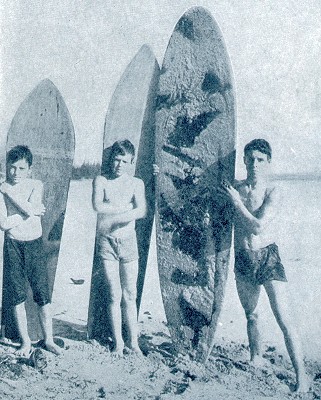 |
Hawaiian Boys and Their Surf-Boards, 1908. Published
in This
article featured several surf riding photographs,
This
article also contained one photograph of canoe surf
riding
|
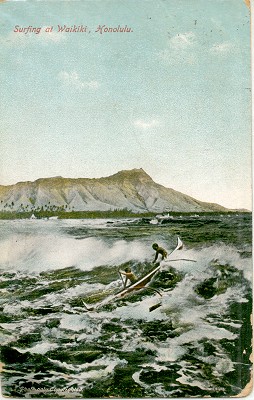 |
Surfing at Waikiki, Honolulu, circa 1908. Wall,
Nichols & Co. Ltd., Publishers, Honolulu.
Hand
tinted. For
the original photograph, see |
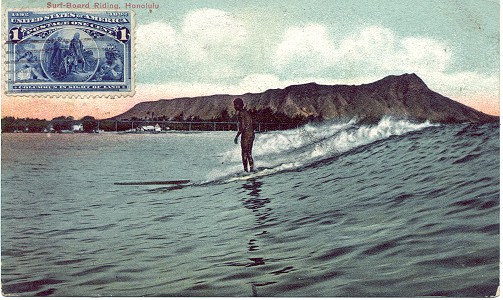 |
Surf-Board Riding, Honolulu, 1910. Hand
tinted version of Rice and Perkins'
Postcard:
Made in Germany. Number: 3584.
|
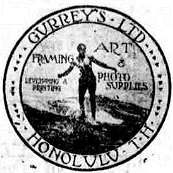 |
[Duke Kahanamoku, Waikiki, 1910.] Published in This advertising logo was
used extensively used by Gurrey to promote his
photographic studio. |
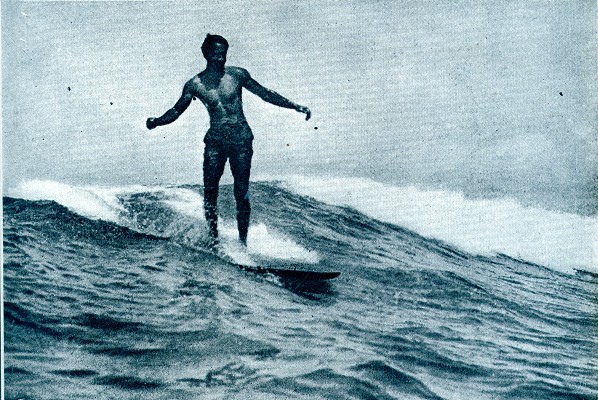 |
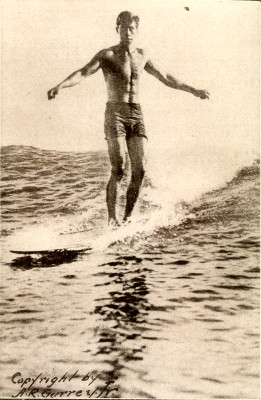
Duke Kahanamoku, Waikiki, 1910. Initially appearing as an
advertising logo, And as the cover
photograph of Also see |
 |
George
Freeth and 1910-type gremmies.
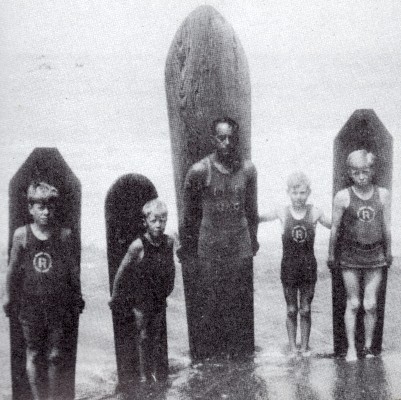
Left to right: George Mithchell, Tommy Witt, Freeth, Ray Kegeris, Garry Witt. [Hermosa]
Photograph: MR. Lemon, coutresy of Lou Martin
Stern and Cleary: Surfing Guide to Southern California, 1963, page17. |
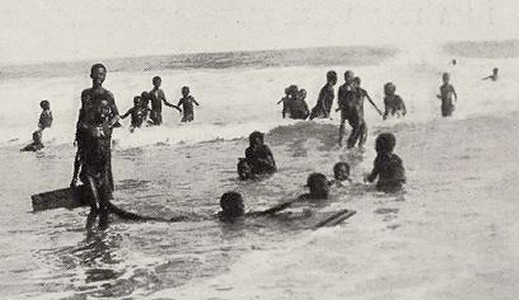 |
Capt. T. C. Hincks: Children bathing in the surf: Gold Coast colony, 1910. Printed in Johnston, Harry Hamilton, Sir : Britain across the Seas: Africa ... the British Empire in Africa, 1910, page 56. Internet Archive https://archive.org/details/britainacrosssea00johnuoft New York Library http://digitalcollections.nypl.org/items/510d47dd-e5e7-a3d9-e040-e00a18064a99 |
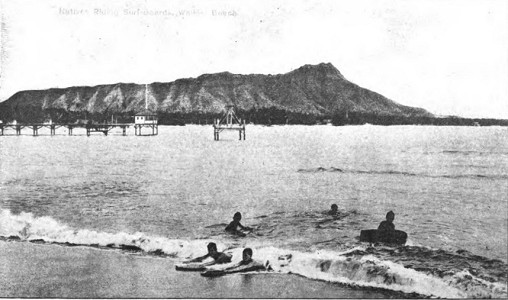 |
Diamond Head from Waikiki Beach, 1911. This photograph of juveniles riding prone surfboards in the shorebreak is one of three shots of Waikiki Beach printed in: Hallock,
Leavitt H.: |
 |
Duke Paoa Kahanamoku, Hawaii's Champion Swimmer of the World, 1912. Printed
in |
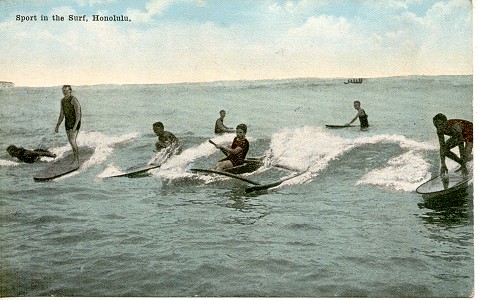 |
Sport in the Surf, Honolulu, 1911. [postcard, hand tinted] Published Exclusively for The Island Curio Co., Honolulu, T. H. [Territory of Hawaii] Tim
DeLaVega notes the image is a manipulated photograph,
accredited to J. J. Williams, 1911, where the standing
surfer to the left has been added from another
photograph. |
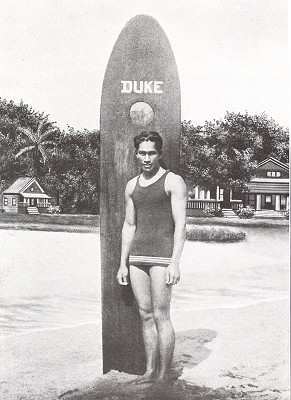 |
Duke Kahanamoku, 1912. Printed
in |
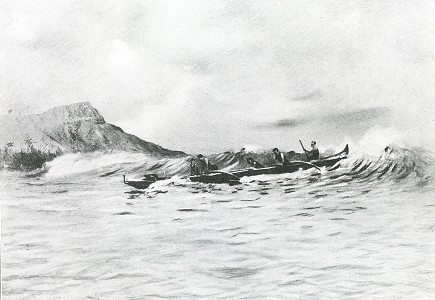 |
Canoe Riding, Waikiki, 1912. Printed
in Probably hand-coloured or otherwise enhanced from a photograph.. |
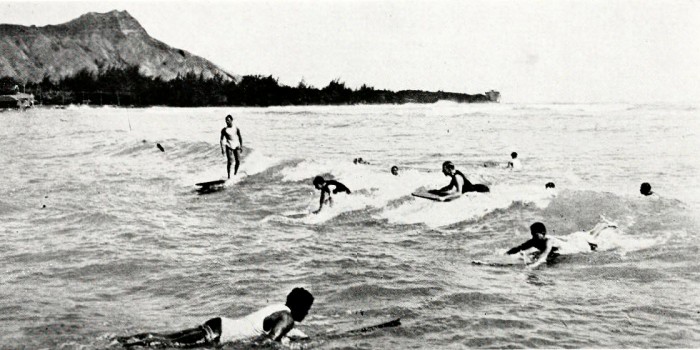 |
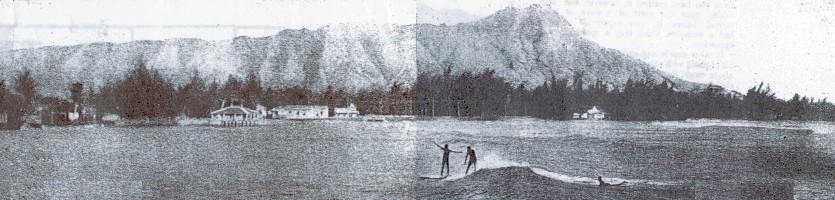
Riding the Waves on the Honolulu Beach. Sydney Mail 7 January 1914, page 26. http://nla.gov.au/nla.news-article158397091 Later published as Native Hawaiians swimming, Waikiki Beach, 1922. in Elder, Orville: A Trip to the Hawaiian Islands Evening Journal, Iowa, 1922, page 168. |
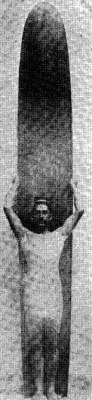 Drawn as
> Drawn as
> 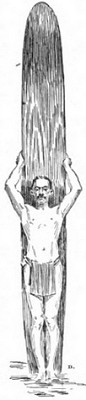 |
Photograph printed in Bernice
Pauahi Bishop Museum: In 1912, a drawing was made of the photograph (attached) and printed in Alexander,
Mary Charlottee:
|
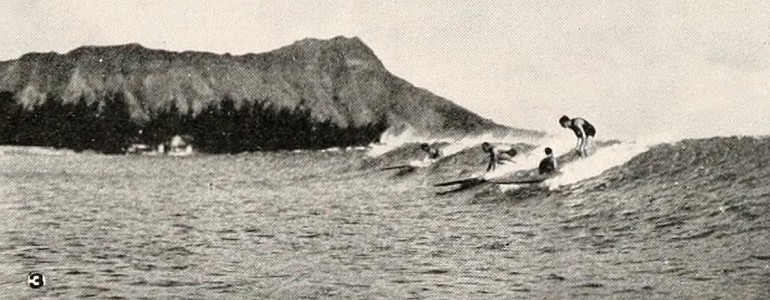 |
Racing in the surf at Waikiki, 1915. One of several, printed in Bryan, William Alanson: Natural History of Hawaii The Hawaiian Gazette Company, Honolulu, 1915, page 80. |
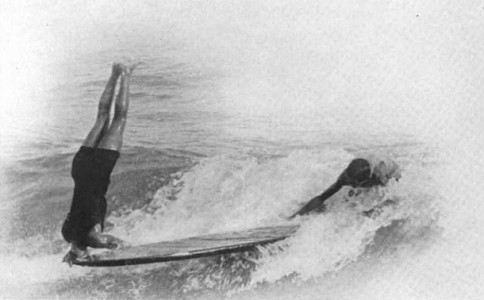 |
AN UNUSUAL
FEAT IN SURF-BOARD RIDING.
Photograph by courtesy of J. P. Gomes, Jr., Honolulu, Hawaii. 1916 Inland Printer- American Lithographer. Maclean-Hunter Pub. Co., Chicago, March 1916 Volume 56 Number 6, page 779 Hathi Trust https://hdl.handle.net/2027/mdp.39015086783696 |
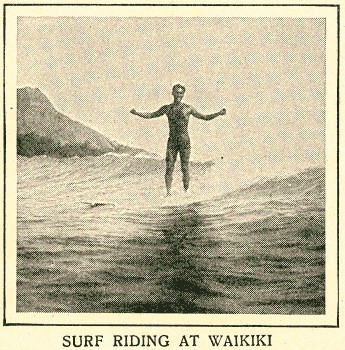 |
Unaccredited : Surf Riding at Waikiki, 1917. Published in The Mentor: Hawaii. Volume 5, Number 14, Serial No. 138 The Mentor Association New York City, 1 September 1917. |
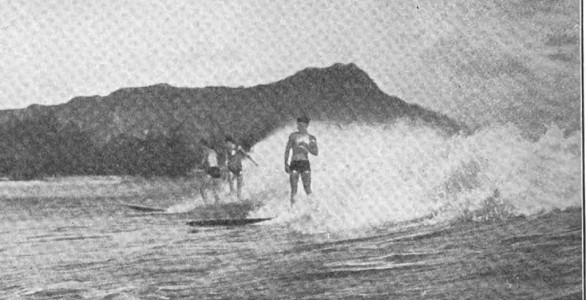 |
Surfriding as Seen From the Cars of the Rapid Transport Company. Mid-Pacific Magazine Alexander Hume Ford, Honolulu, July 1917. Volume 14 Number 1, Advertising, page 2. Hathitrust http://hdl.handle.net/2027/chi.098054077?urlappend=%3Bseq=228 |
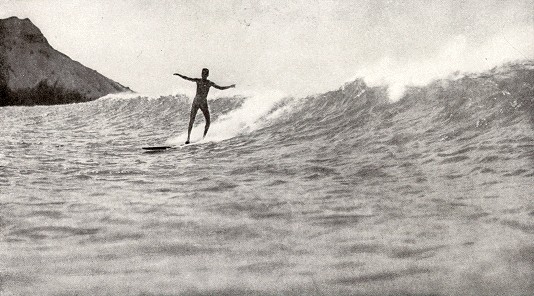 |
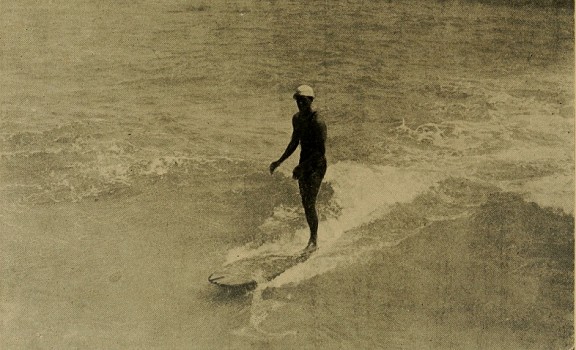
Riding in the Surf at Honolulu, Hawaii, 1919. Printed in The Geography of Games. National Geographic Magazine Volume XXXVI Number Two. August, 1919, page 98. |
 |
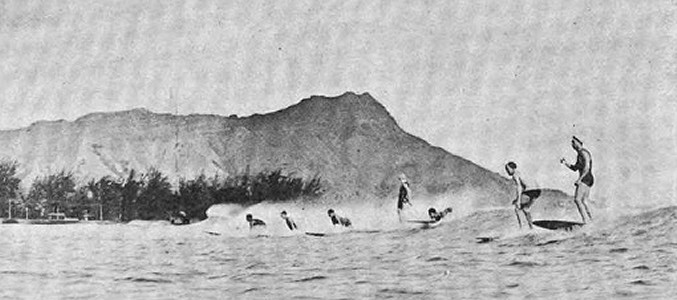
A Statue Bathed in a Whirl of Spray, 1920. Published in Capps, Lewis Edwin A Song of Hawaii. Paradise of the Pacific, Honolulu,1920, page 91. Capps collection of poetry includes The Surf Rider, pages 89 -90. |
 |
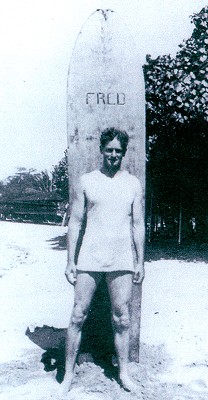
The most typical Hawaiian sport. Mid-Pacific Magazine Alexander Hume Ford, Honolulu, July 1920. Volume 20 Number 1, page 66. Hathitrust http://hdl.handle.net/2027/chi.098054182? urlappend=%3Bseq=68 |
 and and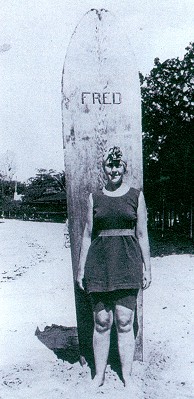 |
Archie and Agatha Christie with their surfboards, Waikiki, 1922. Published in Christie, Agatha: An Autobiography Harper Collins, London, 1997, page 286. In her recollections, Christie recounts her encounters with the surf at Torquay, Muizenberg, and Waikiki. |
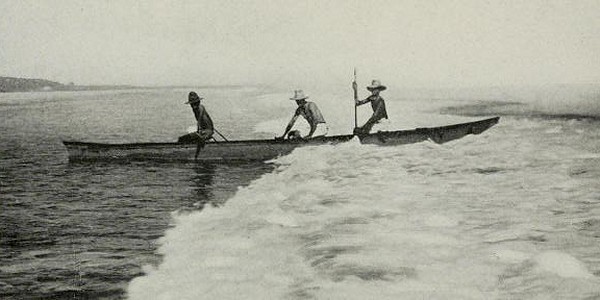 |
Over the reef in a canoe, Samoa, 1922. Published in O'Brien, Frederick: Atolls of the Sun McClelland, Toronto, 1922, page 113. A rare.photograph of a Samoan canoe being ridden over a reef. |
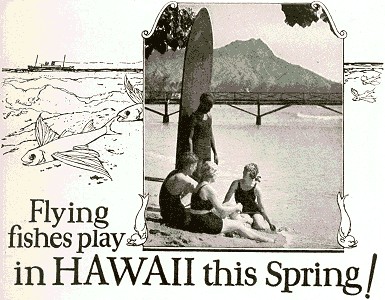 |
Flying fishes play in Hawaii this spring, 1924. Printed in The Hawaiian Islands. National Geograghic Magazine Volume XLV Number Two, February 1924 , page12. |
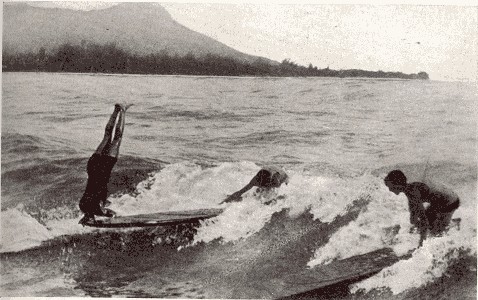 |
Surf riding, Diamond Head, 1924. Printed in The Hawaiian Islands. National Geograghic Magazine Volume XLV Number Two, February 1924 , page155. |
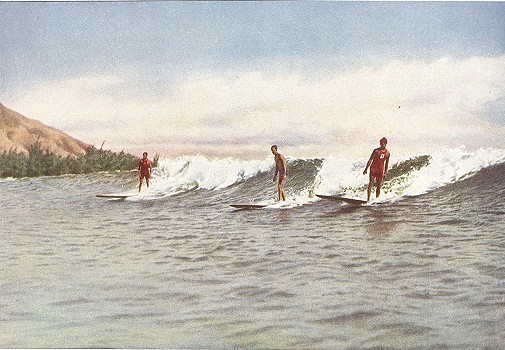 |
Riding The Surf at Waikiki, 1924. Printed in The Hawaiian Islands. National Geograghic Magazine Volume XLV Number Two, February 1924 , plate x.. Note that the photograph has been colourised, and the rider nearest the camera is wearing an Outrigger Canoe Club swimming costume.. Bonine initially filmed surf riding for Pathe Films at Waikiki in 1908-1919. |
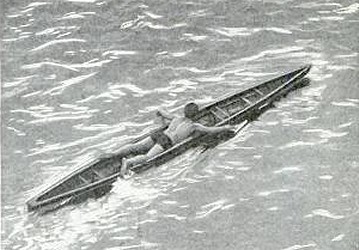 |
Hand-Paddle Surf Canoe, 1927. Published in Paddle Surf Canoe Popular Mechanics Magazine , Vol. 48, No. 5, November 1927, page 769.. An early (Tom Blake) Hollow Board prototype . |
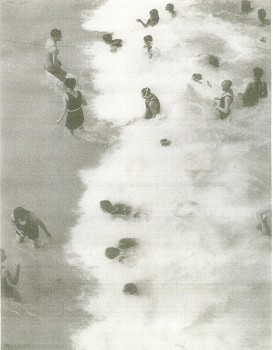 |
Surf Shooting, Coogee, 1929. Published in Curlewis, Jean and Carneaux, Harold: Sydney Surfing Art in Australia, 1929. |
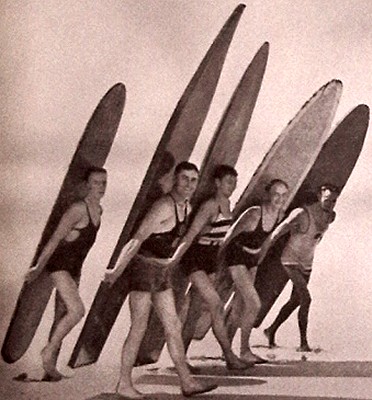 |
Five riders carrying solid timber boards, 1930. Published in Australian National Travel Association: Picturesque Australia. Melbourne, circa 1930. Probably taken at an Sydney inter-club competition, given the variety in costume colour, denoting their respective surf lifesaving club. |
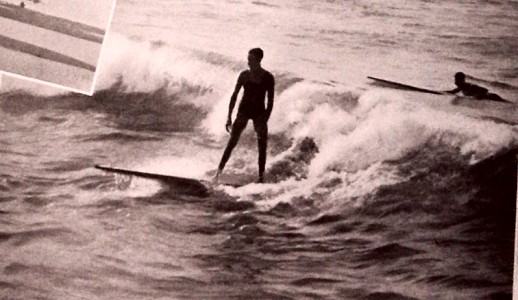 |
Surfboard rider in action, 1930. Published in Australian National Travel Association: Picturesque Australia. Melbourne, circa 1930, page .Possibly at Manly Beach, the image was used as the template for a painting on glass for an Australian beer manufacturer. |
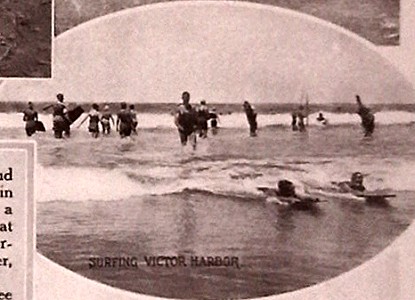 |
Prone board riders at Victor Harbor, South Australia, 1930. Published in Australian National Travel Association: Picturesque Australia. Melbourne, circa 1930. |
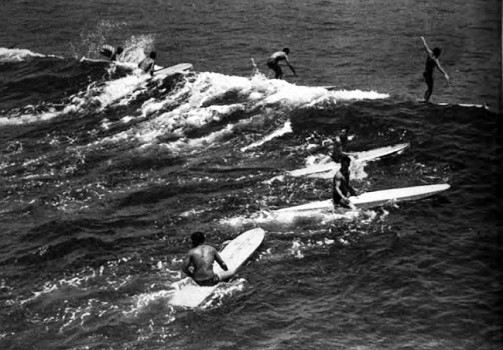 |
Surf Board Riding, Hermosa Beach, 1941 (L.A. County Chamber of Commerce.) Unusual elevated photograph of laminated and hollow surfboards shot from behind the break, taken from the Hermosa Pier. Published in Writers' Program: Los Angeles; a guide to the city and its environs. Hastings House, New York, 1941, page 256. Hathi Trust https://hdl.handle.net/2027/mdp.39015029508374 |
|
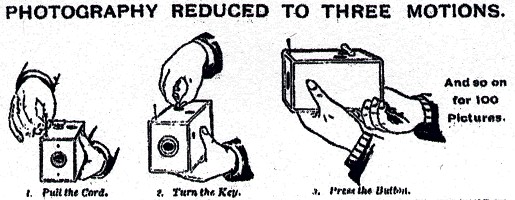
Konemann Verlagsgesellsvhaft mbH. Bonner Str 126, D-50968 Kohn, [English edition] 1998, page 238. The Kodak appealed to the mass market because it was so simple. It went on sale in 1888 when it used paper roll film (stripping film) which had to be processed in the factory. Celluloid, invented in 1861, was produced in thin sheets for the first time by J. Carbutt and W. Hyatt. In 1889 Eastman and his chemist Reichenbach coated long strips of celluloid with a photographic emulsion. These strips were then rolled onto a spool. Celluloid roll film was first sold for use in the Kodak later that year. The No.1 Kodak (1889) had an improved shutter, and the No.2 Kodak used roll film, which produced bigger (90 mm diameter) pictures. The No. 3 Kodak (1890) was the first Kodak to take rectangular photographs. In 1891, three models of Daylight Kodak cameras appeared (these could be loaded in daylight as the film was protected by a black band). In 1895 another novelty appeared, cartridge roll film, which, from 1913, was numbered according to its format starting from 101 size, the system still in use today. It went with the Pocket Kodak camera, which also appeared in 1895. |
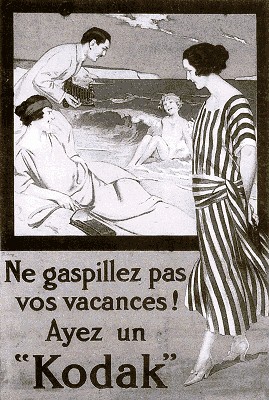 Kodak at the Seaside, 1925. |
|
|
|
|
|
| home | catalogue | history | references | appendix |
