 |
surfresearch.com.au
the catalogue #235 |
| home | catalogue | history | references | appendix |
|
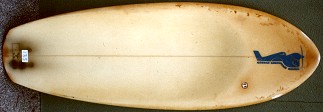
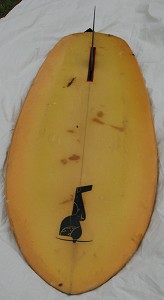
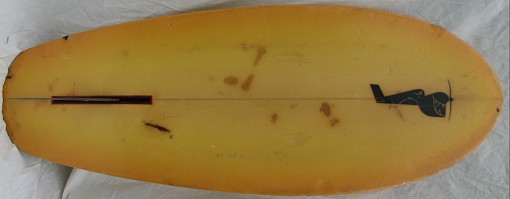
| 1979 George Greenough Design Kneeboard, Shaper: Chris Brock 5 ft 6 1/2" |
#235
|
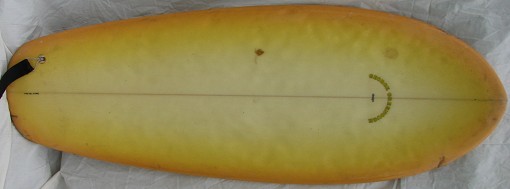
|
Length
:
|
5
|
ft |
6
1/2
|
inches |
L2: 5ft
|
5 3/4''
|
|
Width
:
|
23
|
inches |
Wide
Point :
|
0
|
inches | |
|
Nose
:
|
19
3/4
|
inches |
Tail
:
|
17
|
inches | |
|
Thickness
:
|
2
3/4
|
inches |
Pod
:
|
13
|
inches | |
|
Nose
Lift :
|
inches |
Tail
Lift :
|
inches | |||
|
Weight
:
|
kilos |
Volume
:
|
litres | |||
|
Pod2
:
|
+2
1/2
|
inches |
| FIN
8 1/2" x 4 1/4" base x 11 1/2''span @ 6 1/2'' Laminated fiberglass. Rear screw hole. Finbox (image below). 14'' @ 8''. |
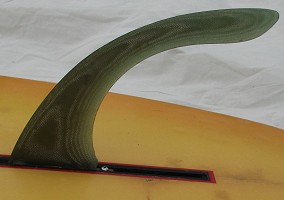 |
| DECOR
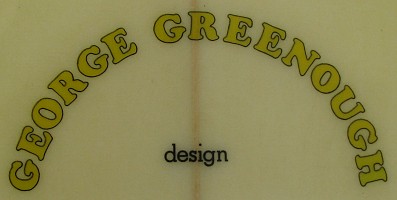
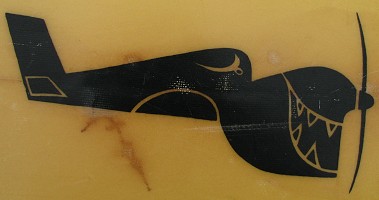
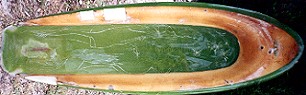
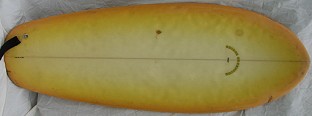
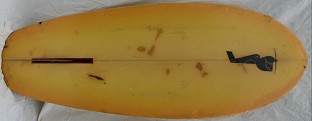
DECALS Deck GEORGE GREENOUGH DESIGN semi-circle in yellow and black at sweet spot. Bottom: Greenough's famous Curtis P-40 Warhawk fighter/bomber (May 1940) graphic - black at nose. http://www.warbirdalley.com/p40.htm MARKINGS Deck: Shape by Chris Brock Black pencil at pod. Bottom: 0111368 - pencil at the pod. COLOUR Deck: Light yellow spray Bottom: Light yellow spray, red pinlines around finbox. |
 |
 |
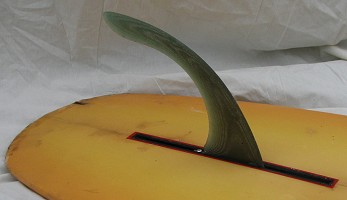 |
The design was given
exposure in the surf media as was George Greenough's surfing and surf photography.
Many manufacturers
made copies of the design and the intensive glassing requirements required
a premium price.
The most recognised
models were produced by at Hayden Surfboards Caloundra Queensland, featuring
Greenough's dramatic Fighter Plane decal, see below.
The design peaked
in popularity around 1970 with the release of George Greenough's The
Innermost Limits of Pure Fun - featuring some his surfing
on Spoon and inflatable mat (see #66)
but most famously included on-board footage of radical performance surfing
and serious tube rides.
Because the high
performance capabilities of the design were only achievable in quality
waves and the low floatation meant that only the most fit riders were able
to catch waves, in Australia by 1973 the design was largely supplanted
by Peter Crawford's Slab design, circa 1969, see #
83.
Initially Peter Crawford
simply filled in the spooned deck to greatly increase floatation and expand
the wave range, but over a long life the Slab was adapted with a range
of rail shapes and fin configerations, see #
58.
In the USA the Fish
was a notable alternative in kneeboard design.
Greenough's extreme
design was attempted to be recreated in stand up boards, most infamously
by Nat Young at Gordon Woods Surfboards in 1965, see The
Nautilas.
Although this board
was a failure, George Greenough's fin design was to have a huge impact
on Australian surfboards and by 1968 almost every fin bore some relationship
to Greenough's high apsect template.
In 1967 Midget Farrelly, Bob McTavish and other shapers in Sydney developed a short deep vee bottomed board that had strong elements of George Greenough's influence, see # 26.
 |
 |
|
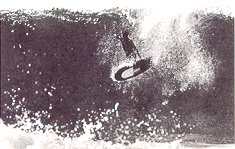
Photograph by Tanya Binning. First published Surfing World Vol No 1968? This cropped version from Margan and Finney , page 310. The most outstanding photograph of committed
high performance
|
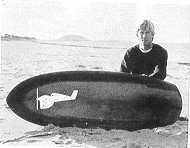
Photograph by ? Caloundra, Queensland 1966. "Far Out Flexible Surfboard... the wave of the future" by Eric Blum as told to Al Lees. Popular Science magazine August 1969, page 92. |
 |
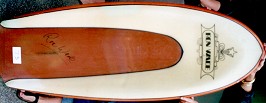
1973
Jackson, Greenough Spoon 5 ft 10" |
 |
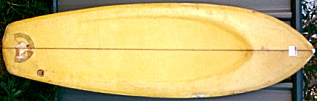
1973
Ron Wade Spoon 4ft 8'' |
 |
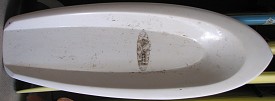
1975?
Backyard, Spoon deck Kneeboard 5ft 6" |
 |
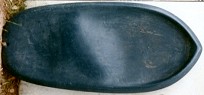
1975
Ron Wade Molded Spoon, 4ft 10'' |
 |
1975
Belly Bogger 3ft 7'' |
 |
1978
Sky Kneeboard 5 ft 8 1/2" George Greenough Design Shaped by Chris Brock |
| See
Paipo
Catalogue for other Kneeboards.
Other Sky Surfboards
Magazines
Bob
McTavish : 'Bout a Spoonful.
The
Australian Surfer's Journal
|
 |
| home | catalogue | history | references | appendix |