surfresearch.com.au
references
: books b
| home | catalogue | history | references | appendix |
|
surfresearch.com.au
references
: books b
|
|
|
|
|
|
|
|
|
|
|
|
|
|
|
|
|
|
|
|
|
|
|
|
|
|
|
|
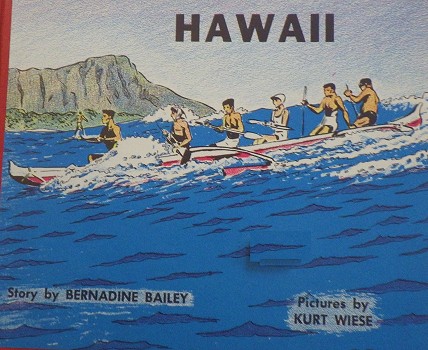
| 1960 Bailey, Bernadine: Picture Book of Hawaii Illustrated Kurt Wiese. Albert Whitman and Company, Illinois, 1960. Hardcover, dust jacket , 28 pages. Review Hawaii which has Long Captured IMAGINATION Of People Everywhere became 50th state in Union March 18, 1959, Sunny Land of Tropical Flowers & Trees Of White Beaches & Blue Seas Is Our Only Island State. While the Sugar & Pineapple Industries are Most Important to the Economy of the Land, Tourist industry play Large Role as Well, People come all the Yr. Round To Partake of Hawaii s Lovely Climate & Friendly Culture. |
 |
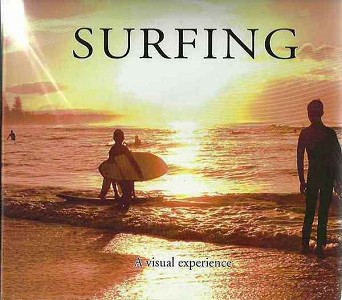
| 2007 Baker, Chris: Surfing: A Visual Experience Little Hills Press, Sydney, 2007. Hardcover, 96 pages, colour photos, Index. Review A completely unremarkable collection of surfing and seashore photographs from around the world at Dawn, Day and Sunset. The captions are very strange: Surfers riding the wave on a warm day at the beach (page 71) and Surfer in a big Pipeline (sic, page 75). |
 |
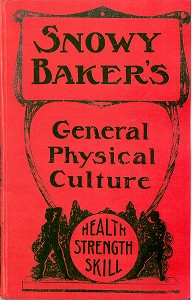
| 1910 Baker, Reg "Snowy": General Physical Culture. With Articles On Special Subjects By Leading Australian Athletics. (Health Strength Skill). Melbourne. G.Robertson & Co., 1910. Hardcover, 126 pages, black and white photographs and diagrams. Cover image: Mitchell Library, Sydney. Review For extracts see the chapter by Snowy's brother: Harold Baker : Surf Bathing (1910). Reported to also include a chapter on the Australian Crawl swimming technique by cecil Healy, previously published as a pamphlet in 190?. |
 |
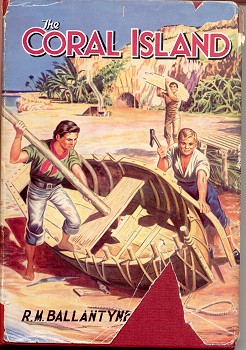
| 1858 Ballantyne, R.M.: The Coral Island. Dean & Son, London. No date but circa early 1940s. Number 23 in the 'Dean's Classics' series. Originally published by T. Nelson and Sons, London, 1858. Hard cover, 248 pages. Review. While Ballantyne did not travel to the Pacific Islands before writing The Coral Island, the text clearly indicates that he read extensively on the subject before writing his classic boy's adventure novel in 1857. In his account of Polynesian surfriding (page 175) he appears to have read at least the published accounts of Cook's marineers in the Hawaiian Islands and the Rev. Ellis' reports from Tahiti and Hawaii. In particular, Ballantyne's remarks on swimming and diving (page 174) are probably derived from Ellis. See: 1858 R.M. Ballantyne: Coral Island Surfing. |
 |
| 1963 Banks, Joseph : The Endeavour Journal of Joseph Banks 1768 - 1771 Edited by J. C. Beaglehole The Trustees of the Public Library of New South Wales in Association with Angus and Robertson 89 Castlereagh Street, Sydney. First published February 1962. Second Edition 1963. Two Volumes. Review Tahitian surfriding, page 283, Tahitian canoe construction pages 319 - 320, Tahitian carpentry pages 363 - 364. See Banks : Tahiti 1769. |
 |
| 2005
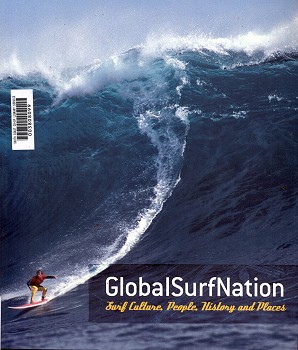
Barr, Matt; Moran, Christopher and Wallace, Ewan : Global Surf Nation : Surf Culture, People, History and Places Hardie Grant Books 85 High Street Prahan, Victoria, 3181, Australia. 2005. Soft cover, 112 pages, colour photographs, black and white photographs, Picture Credits. Review World surfing presented by country with notes on History, Locations, Surfer Profiles, Manufacturers and/or Shapers. Photography is mostly current as of 2005. Despite being edited (rather than written) from a number of diverse uncredited sources, the is no bibliograhy or attempt to credit them. The book has a large number of errors. In Australia, the Gocher Myth is again repeated (page 55), and the section on Duke Kahanamoku (pages 55 to 57) has several inaccuracies. |
 |
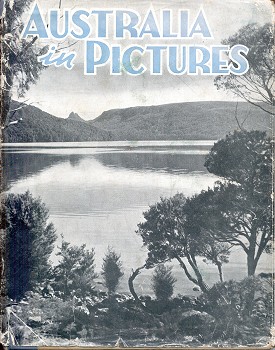
| 1943 Barrett, Charles: Australia in Pictures Cassell and Co. Ltd, Melbourne, Sydney, 1943. Hard cover, 89 pages, black and white photographs. Review A selection of photographs from all Australian states and territories, some by the author, but most from various government tourist promotion agencies. An arcticle, Sunlight Surfing Beaches, page 65, notes the popularity of surfing in the southern capital cities - Sydney, Melbourne, Adelaide and Perth. Coolangatta is the recognised surfing resort for Brisbane. It is accompanied by a photograph of Moama Beach, near Adelaide (page 66) showing at least six prone board riders. See: 1943 Charles Barrett : Sunlit Surfing Beaches |
 |
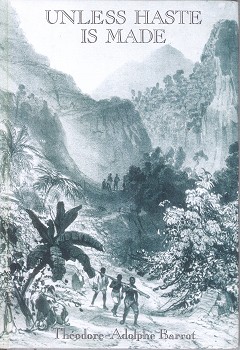
| 1836 Barrot, Theodore-Adolph: , Unless Haste is Made: A French Skeptic's Account of the Sandwich Islands in 1836. Illustrated by Barthelme Lauvergune and Theodore Auguste Fisquet. Press Pacifica, Kailua, Hawaii, 1978. Penny Pagliaro (Editor), Daniel Dole (Translator). Introduction by Arthur Nagasawa. Hard cover, xxx pages, black and white illustrations. Review DeLaVega et. al (2004) note: Barrot, Theodore Adolphe 1803-1870 A5- "Les Iles Sandwich" Revue des deux mondes, Aug. 1, 15, 1839. French magazine with text of his visit to the Sandwich Islands in 1836. A6- "Visit of the French Sloop of War Bonite, to the Sandwich Islands, in 1836" The Friend, Serialized Jan.-Nov., 1850. Translated version of above. For extracts see: 1836 Theodore-Adolphe Barrot :Surfriding at Kealakeakua, Hawaii. |
 |
| circa 1946
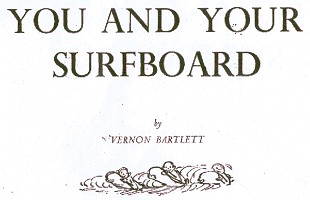
Bartlet, Vernont: You and Your Surfboard. Veron Bartlett, 6 Grove Street London W.C.1 Printed in Great Britain by Davie-Johnson Ltd Portbrothan Bay, Padstow, Cornwall, circa 1946 Soft cover, 23 pages, black and white illustrations by Maurice Bartlett. Review A post-war prone surfriding manual with a low key and humorous text and highly amusing illlustrations. Companion book to Ronald S. Funnell's The Art of Surf-Riding on the Cornish Coast (1953). Note the publishing details are different to those listed in DeLaVega et al. (2004).page 34. A jpg copy of this book was contributed, with many thanks, by Henry Marfleet, January 2008. |
 |
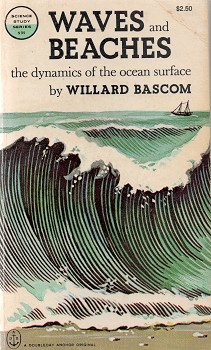
| 1964 Bascom, Willard : Waves and Beaches - the Dynamics of the Ocean Surface. Anchor Books Doubleday and Company Inc. Garden City, New York 1964. Soft cover, 267 pages, 25 black and white plates, 77 black and white illustrations Bibliography, Index. Review The definite account of breaking wave dynamics and their effect on coastal landforms. Of specific interest to surfers are Surfing on Waves, pages 126 to 129 and Chapter VIII The Surf, which includes Willard Bascom's method for estimating breaking wave height, page 173, Figure 56. A detailed discussion of this method is at Estimating Wave Height. |
 |
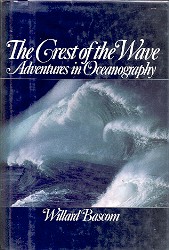
| 1988 Bascom, Wllard : The Crest of the Wave - Adventures in Oceanography. Harper and Rowe Publishers, New York 1988 Hard cover, 318 pages, 54 black and white plates. Review Entertaining account by one of the pioneers of the science of oceanography and the author of Waves and Beaches, 1964. Chapter I Surveying the Surf, is of most interest to the surfing reader - note in particular a simple method to measure wave height, page 7 and the associated plates, facing page114 and following. Chapter XII Ocean Pollution? is well argued and flys in the face of many commonly accepted theories. Of obsure intest are Chapter IV : From Cancer to Capricorn and Chapter VI : Living with Nuclear Explosions, detailing the study of waves produced by nuclear tests at Bikini Atoll, 1951 - 1954. Despite the enormous energy released in these explosions, "the waves produced ... were less than phenonomal." - page 164. |
 |
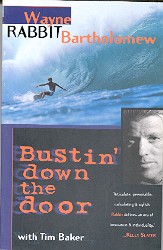
| 1996 Batholomew, Wayne ‘Rabbit’ With Baker, Tim : Bustin’ down the door Harper Sports, Harper Collins Publishers 25 Ryde Road, Pymble, Sydney NSW 2073, Australia 1996 Soft cover, 368 pages, 46 b/w plates, 5 b/w maps, epilogue (cast), index. Review Dynamic surfer and personality (contrast MR) provides an entertaining story of the boy from the wrong side of the tracks who made good. Covers a vast range of surfers, waves, contests and countries. Production is less than satisfactory – poor binding and the limited number of photographs are cramped. Tim Baker is a former editor of Tracks and Surfing Life magazines. |
 |
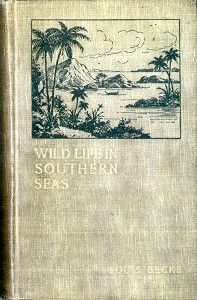
| 1898 Becke, Louis : Wild Life in the South Seas. New Amsterdam Book Company 156 Fifth Avenue, New York. T. Fisher Unwin, London, 1898. Hard cover, ? pages, Black and white illustrations. Review. For extracted chapter : A Noble Sea Game, pages 147 to 157, see: 1898 Louis Becke : A Noble Sea Game. |
 |
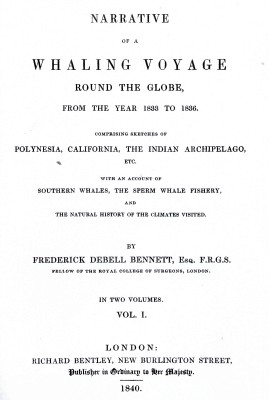
| 1840 Bennett, Frederick Debell: Narrative of a Whaling Voyage Round the Globe, from the year 1833 to 1836. Richard Bentley, New Burlington Street, London, 1840. Hard cover, Two volumes. Review Although Bennett travelled extensively across the Pacific, he only reported surfriding at Pitcairn Island. See: 1834 Frederick Bennett : Surfing on Pitcairn Island. |
 |
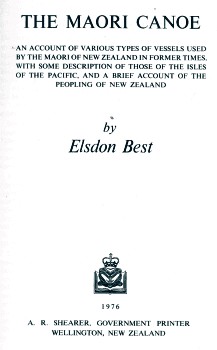
| 1925 (1976) Best, Elsdon: The Maori Canoe A. R. Shearer, Government Printer, Wellington, 1976. Reprint of 1925 edition. Best, Elsdon: The Maori Canoe Bulletin Number 7, 1925 Dominion Museum , Wellington, New Zealand, 1925. Hard cover, 452 pages, black and white illustrations and photographs, Appendix I (Names of Parts of Maori Canoes), Appendix II (List of Authorities Quoted), Index. Review The definitive work on the Maori canoe, Best's work also covers the canoes of other Pacific islands. See Source Documents: 1925 Elsdon Best : The Maori Canoe. Also note: Best, Elsdon: Polynesian Voyagers: The Maori as a Deep-sea Navigator, Explorer, and Colonizer Government Printer, Wellington, New Zealand, 1975. See: Best, Elsdon: The Maori Canoe, pages www.ethnomath.org/resources/best1925a.html books.google.com/books/about/The_Maori_canoe.html |
.
 |
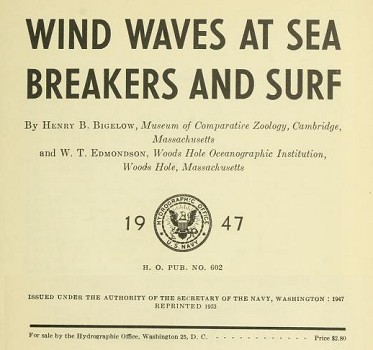
| 1947 Bigelow, Henry B. and Edmondson, W. T.: Wind Waves at Sea, Breakers and Surf U.S. Hydrographic Office Publication Number 602, 1947. 177 pages. Internet Archive windwavesatseabr00bige |
 |
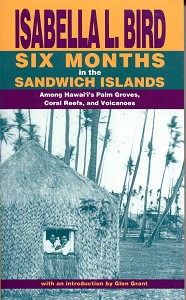
| 1875 Bird, Isabella L.: Six Months in the Sandwich Isles- Amoung Hawai'i's Palm Groves, Coral Reefs and Volcanoes. John Murray, London, 1875. Pages 14, 69-70, 203, 281-282. G. P. Putman's Sons, New York, 1881. Mutual Publishing, 1215 Center Street, Suite 210 Honolulu, Hawaii 96816. 1988, 2001, 2004. Review Isabella L. Bird's Six Months in the Sandwich Isles is a wonderfully written book and valuable historical resource. Apart from her engaging style, the account (based on a collection of letters originally written to her sister) reads as an authentic voice. See Isabella L. Bird : Surfriding at Waikiki, Hilo and Kauai 1873 |
 |
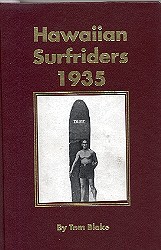
| 1935 Blake, Tom Hawaiian Surfboard Paradise of the Pacific Press, Honolulu, Hawaii 1935 Hard cover with various dustjackets, 95 pages (text), black and white photographs. Review Dela Vega (2004) notes four 'editions': The initial printing was hard cover with a dust jacket, followed by an imprinted cloth cover, which was probably the original without the dust jacket. The were two later editions in tapa cloth dust jackets. Lynch and Gault-Williams (2001) imply that the tapa cloth cover editions, highly prized by contemporary collectors, were apparently an attempt by Blake to value-add to his stock of unsold copies, page ? 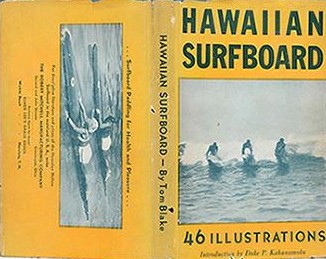 Dust Jacket
First
tapa cloth edition contributed,
with thanks, by Henry Marfleet, Ashford, Kent, UK.
April 2000.Reprinted in 1983 as Hawaiian Surfriders 1935 Mountain and Sea Publishing, Box 126 Redondo Beach California 90277. See below. Note: Van Dalen, Deobold B: The anatomy of professional literature; a bibliography of books in health, physical education, recreation, safety, camping, and the allied fields from 1930 to 1950. Pittsburgh, 1950. http://hdl.handle.net/2027/wu.89097565881 Page 83. Swimming and Watersports: Blake: Hawaiian Surfboard (1935) $1.85 Drummond: Art of Wave Riding (1931) $1.00 |
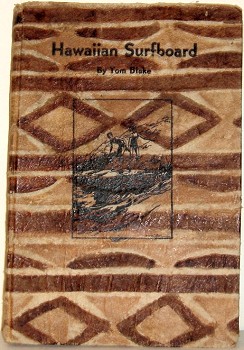 First tapa cloth edition.
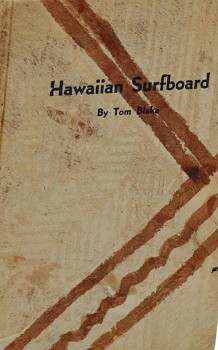 Second tapa cloth edition. |
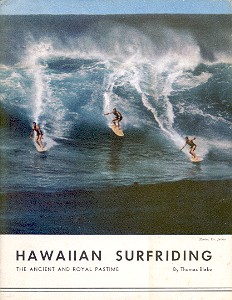
| 1961 Blake, Tom Hawaiian Surfriding Nothland Press, Flagstaff,Arizona, 1961 Soft cover, 41 pages, 58 black and white plates, 3 black and white illustrations. Review Outstanding book with minimal text supporting informative photographs. Many are unique to this book and most have been subsequently re-published, often cropped. Highlights include an advanced 'learning' board with substantail nose rocker, paddling position pad, swallow tail with foiled fin (pages 4 and 5) and Tom Blake with boards from the Bishop Museum collection. |
 |
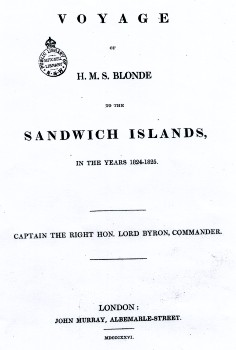
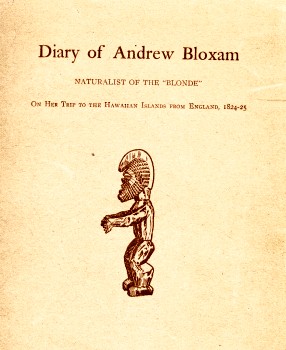
| 1825 (1925) Bloxam, Andrew: Diary of Andrew Bloxam, Naturalist of The "Blonde" On Her Trip from England to the Hawaiian Islands 1824-25. Bernice P. Bishop Museum Special Publication Volume 10. Bernice P. Bishop Museum, Honolulu, 1925. Soft cover, 96 pages, black and white plates (mostly protraits), black and white illustrations and maps, Appendix. Review See 1825 Andrew Bloxam : Sandwich Islands. Also 1825 Robert Dampier : Sandwich Islands. and 1825 Lord Byron : Liliah and Floatboards. |
 |
| 1876 Boddam-Whetham, J. W.: Pearls of the Pacific Hurst and Blackett, London,1876. internet archive
1876 J. W. Boddam-Whetham : Surfriding at Hilo. |
 |
| 2010
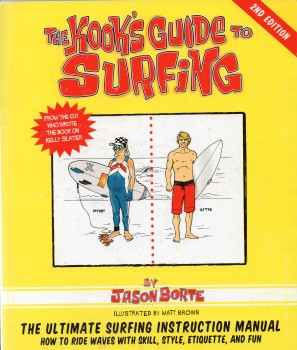
Borte, Jason: The Kook's Guide to Surfing Surfers i Publishing. Virginia Beach, Virgina, USA, 2010. Soft cover, 387 pages, black and white illustrations and photographs, Other works, Glossary. Review. Another introduction to basic surfing technique. Interestingly, in an observation rarely noted, Borte writes: "Finally, the time spent actually 'riding' makes a miniscule portion of the time attributed to surfing. Before any riding can take place, one must check the conditions, suit up and wax up, paddle out, get in line, choose a wave and catch it. The ride typically measures in seconds, and after that another hunk of time - typically anywhere from a few minutes to half an hour - will pass before the next is ridden. In the interim, there is more paddling, and often sitting, waiting, searching, and hoping." - page 4. |
 |
| 1978
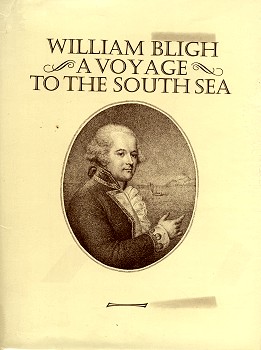
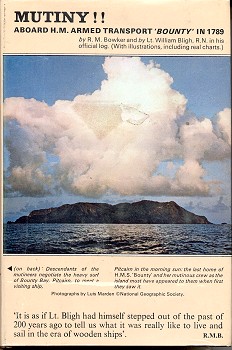
Bowker, R.M. and Bligh, Lt. William: Mutiny!! Aboard HM Armed Transport 'Bounty' in 1789 Bowker and Bertram Ltd. Old Bosham, Sussex, England 1978. Hard cover, 387 pages, black and white illustrations and photographs, Other works, Glossary. Review. Bowker notes,page 252, in the preface to Chapter 6 (an account of the five month stay on Tahiti): "There is not the space in this volume to include the entire log for this period, so I have selected those parts which bear upon the ship's mission and upon the mutiny to come; and I have included other items which appear to be of particular general and nautical interest." See 1788 William Bligh and James Morrison : Surfriding in Tahiti |
 |
| 1986 Brash, R. : How Did Sports Begin ? - A Look at the Origins of Man at Play Revised and enlarged edition, Fontana /William Collins Pty Ltd, Sydney, 1986 David McCay Co. Inc., New York 1970 Longman Australia Pty Ltd, 1971 Longmans, Green and Co. Ltd, 1972. Soft cover, 437 pages, black and white plates, Index. Review An expansive account of the origins of various sports, that puts surfing in a global context. The surfing entry, pages 329 to 338, largely relies largely on Finney (1966) for early Polynesian developments. The adoption of surfing by Australians and their enthusiasm for surf life saving is appears to be sourced from Maxwell (1949). An early surfing woodblock print and a photograph of Bondi S.L.S.C., circa 1907 are included in the second section of the black and white plates. |
 |
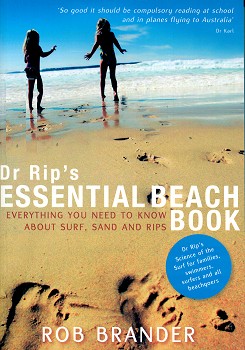
| 2010 Brander, Rob : Dr Rip's Essential Beach Book - Everything You Need to Know About Surf, Sand and Rips. UNSW Press University of New South Wales, Sydney NSW 2025, Australia, 2010. Soft cover, 238 pages, colour photographs and illustrations, Acknowledgements, Index. Review A comprehensive, if not exhaustive, book on the beach environment suitable for the general reader. Brander is known for illustrating the nature of rips with the use of "harmless purple dye" (pages 122-125), a method of observing the motion of water initially suggested by Leonardo da Vinci in the 16th century. Regrettably, How to Measure Wave Height, pages 42-43, does not acknowledge Willard Bascom's definitive method presented in his seminal work on wave research, Waves and Beaches (1964). See Appendix: How to Measure Waves. For an in-depth analysis of sand, see Michael Welland's Sand - The Never-Ending Story (2009).
|
 |
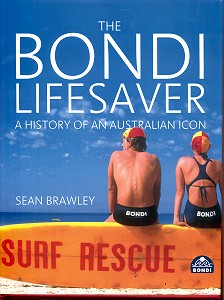
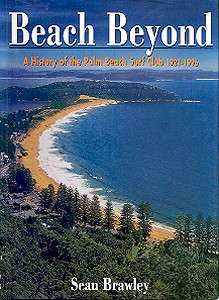
| 1996 Brawley, Sean : Beach Beyond - A History of the Palm Beach Surf Club 1921 - 1996 University of New South Wales Press Ltd. Sydney 2052 1996 Hard cover, 300 pages, black and white photographs, Endnotes, Appendicies. Review Excellent detailed history of a Sydney surf life saving club that has strong ties to surfboard history. Especially note 'Surfboards, Surfoplanes and Skis' pages 54 - 61, 'Boats and Boltar' pages 139 - 151 and 'The Malibu Era' pages 151 - 160. Several other photographs in other sections are of interest and the Endnotes and Appendicies are extensive. Expertly researched and with a fine balance between recording the facts and personal anedotes. Sean Brawley followed this with a history of the Bondi SBLSC in 2007, see below. Also see: Early Pittwater Surfers And Surfing: Alrema Becke - threads collected and collated by A J Guesdon, 2017 http://www.pittwateronlinenews.com/Early-Pittwater-Surfers-Alrema-Becke-Palm-Beach.php |
 |
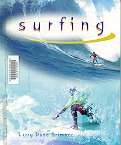
| 1997 Brimner, Larry Dane Surfing Franklin-Watts A Division of Crlier Publishing, New York. 1997 Hard cover, 64 pages, 19 colour photographs, 1black and white photograph, Publications and Organisations, Internet Resources, Index. Photographs by Peter Sterling. Review Basic juvenile introductory How -To book with well selected photographs of unknown or uncredited surfers. History section incorrectly credits Faye Baird Fraser, San Diego California in 1925, as the first documented female boardrider (pages 13 to 15) - see Isobel Letham in Duke 1914 |
 |
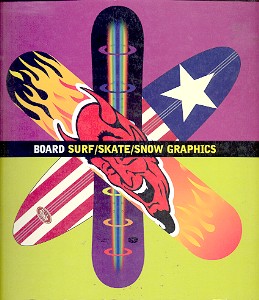
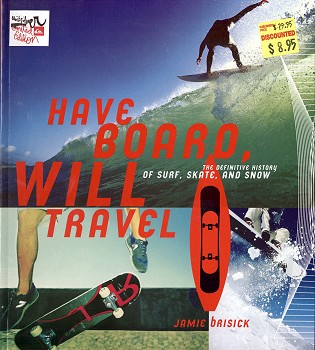
| 2004 Brisick, Jamie : Have board, Will Travel - A Definitive History of Surf, Skate, and Snow. HarperCollins Publishers 10 East 53rd Street New York. NY 10022. 2004. Soft cover, 195 pages, extensive colour and black and white photographs, Acknowledgements, Credits, Index. Review Although an origininal combination linking the histories of three board sports, the book can hardly be described as "definitve". The surfing section has a considerable number of historical errors, which casts some doubt on the validity of the other sections. There are also conceptual problems - "Unlike surfing, skateboarding does have a utilitarian purpose." (page 18) ignores the early use of surfboards for transport by Polynesians. See #500. Like some other commentators, Brisicks ignores the direct influence of windsurfing (another Board sport?) on the development of tow-in surfing. Of most interest is the revelation that snowboard design dates back to 1939 - the Wunderlund board, page 159. |
 |
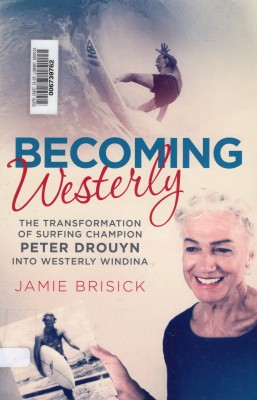
| 2015 Brisick, Jamie : Becoming Westerly The transformation of surfing champion Peter Drouyn into Westerly Windina Allen & Unwin, February 2015. Soft cover, 344 pages, colour and black and white plates, Acknowledgements, Credits, Index. Review. While Jamie Brisick had devoted immense time and resources in telling the story of Westerly, it is unfortunate that a similar effort was not accorded to Peter. In the account of the surfing career of Peter Drouyn there are numerous errors and although these are mostly minor, for anyone already familiar with this period of surfing history they are annoying and reflect on the author's authority. It is not the case that Duke Kahanamoku introduced board riding to Australia and Isabel Letham became Australia's first surfer; Peter's first board, a second-hand balsa Malibu from a shaper who moved up from the the Gold Coast from Sydney, was probably Joe Larkin, less likely Roger 'Duck' Keiran; Keith Paull, not Paul; McTavish did not compete at the 1966 World contest in California (he was unable to enter the US because of his conviction for illegal entry circa 1963); Magic Sam ? ... Nat did write that Sam was magic, but he/she was only ever Sam. Many of Westerly's interpretations of events go unchallenged, for example after his victory NSW surfers started trickling up to Queensland ... now people respected Queensland surfing and Drouyn's role in prompting Nat and McTavish in their development of performance surfing and shorter boards. It is unclear if the claim, two consecutive junior titles was a monster feat, is that of Westerly or Jamie. Regardless, given the earlier dominance of Farrelly, and then Nat, in the junior ranks this was unlikely to be considered particularly remarkable at the time, unlike the four connective junior titles of Victoria's Wayne Lynch, 1967-1970. Randy Rarrick was probably misquoted in referring to the sand dunes of Taree (page 63). Although he did attend the world contest at Puerto Rico in 1968, Peter Drouyn contracted pleurisy on the flight (page (68), but it is unclear if he did not compete or his performance was impeded. |
 |
| 1998
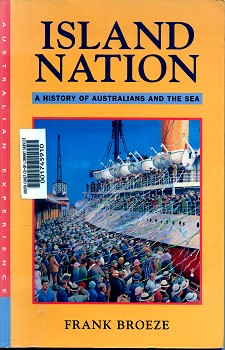
Broeze, Frank : Island Nation - A history of Australians and the sea. Allen and Unwin 9 Atchinson Street, St. Leonards, NSW 2065 Review Drawing an alternate perspective to the traditional reading of Australian history, influenced by Geoffrey Blainey's The Tryanny of Distance (1966), Broeze largely concentrates on the importance of coastal and international shipping to the development of the nation. Aboriginal and European settlement is covered in chapter 1, coastal exploration in chapter 4, and cultural response (including surf lifesaving and surf riding) in chapter 8. Some of Broeze's account has been adjusted by subsequent research, for example the"role" of William Gocher in popularizing daylight swimmimg (page242), and in some places his analysis is less than accurate, no doubt a disadvantage when adopting such a broad perspective. For an expanded account of these themes, see: Matsuda, Matt K.: Pacific Worlds - A History of Seas, Peoples and Cultures (2012) For a detailed history of Sydney Harbour, see: Hoskins, Ian: Sydney Harbour - A History (2009) |
 |
|
Bronowski,
Jacob:
The Ascent of Man British Broadcasting Corporation, 35 Marylebone High Street, London W 1 M 4 AA, 1973. Review |
 |
| 2006
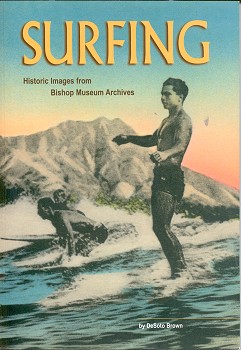
Brown, DeSoto : Surfing - Historical Images from the Bishop Museum. Bishop Museum Press 1525 Bernice Street, Honolulu, Hawai'i 96817 www.bishopmuseumpress.org/press Review Fifty percent of the photographs are probably previously unpublished and many of the others have extended captions with new information. Highly interesting is "A board called Malibu" (my caption) with Richard Boone, Duke and Peter Lawford at Waikiki in the early 1950s, page143. Lawford brought the board to Australia in 1950, see History: 1956. Note: 1. The book should be titled "Historical Photographic Images from the Bishop Museum" as there are none of the early surfing illustrations, for example John Webber's first image of a surfboard in 1779. See surfing images : 1788 to photography 2. 'Duke at Freshwater' (pages134-135) for the first Australian demonstration uses Ablie Thom's well researched, but incorrect, 23 Dec 1914 (actually 24th) and the surfing photograph is Cronulla Beach in February and not Freshwater in January. |
 |
| 2001 Bryant, Edward : Tsumami - The Underrated Hazard Cambridge University Press, The Pitt Building Trumpington Street, Cambridge, United Kingdom. 2001 Soft cover, 320 pages, 40 black and white photographs, extensive black and white illustrations, diagrams, maps, graphs and tables, References, Index. Review A scienticific analysis of the effects of tusami on coastal landforms, the book includes expert discussion of wave dynamics. The majority of tusami generated landforms examined are Australian locations, although the book fully covers tusami disasters through history and around the world. Special note : the Preface comments of the use of online references .... Internet... material may not be readily available because the addresses have changed or because of the lack of an archival tradition for this new resource medium. - page XXV. This is a major headache for Internet researchers, and echoes advice on the Web LInks page... If you find something that is really important to you, then either save it digitally or print it out. There is no guarantee that it will be there the next time you look. |
 |
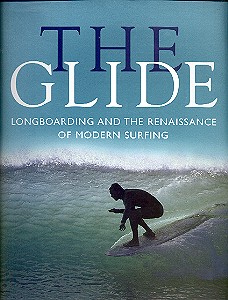
| 1998 Brystrom, Chris : The Glide – Longboarding and the Renaissance of Modern Surfing Duranbah Press (Publisher). Wakefield Press (Distributors) Box 2266, Kent Town, South Australia 1998 Hard cover, soft cover, 128 pages, 191 colour photographs / sequences, 41 b/w photographs, 49 illustrations. Review Stylishly produced with excellent photograghy, this work has a strong U.S. perspective. Historical chapters (Bob Cooper, Peter Troy and Pat Curren) are very interesting. ‘Twenty Surfers’, like most attempts at ranking, is strictly subjective (see Cassidy, 1983). ‘Water Women’ is a worthy inclusion. ‘Art Forms – Art / Poetry / Music / Photography’ is almost exclusively American – four pages devoted to surf poetry is four pages too many. If it is the intention of the author to prove or demonstrate a thesis (‘The Renaissance of Modern Surfing’), then the result is less than satisfactory |
 |
| 1938
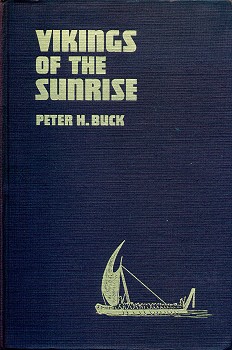
Buck, Peter Henry : (Te Rangi Hiroa): Vikings of the Sunrise J.B. Lippincott & Co, Philadelphia, 1938 Frederick A.Stokes Company, New York U.S.A., 1938. Later published as Vikings of the Pacific Phoenix Books, University of Chicago Press, Chicago, IL, 1959. Hard cover, 355 pages, black and white photographs, ilustrations (chapter headings), and maps, Bibiography, Index. Review For extracts, Source Documents: 1938 Peter H. Buck: Vikings of the Sunrise. For an online edition (with four maps, but unfortunately without the illustrations), see: http://www.nzetc.org/tm/scholarly/tei-BucViki.html New Zealand Electronic Text Centre Title: Vikings of the Sunrise Author: Te Rangi Hiroa (Sir Peter Henry Buck) New Zealand Edition Publication details: Whitcombe and Tombs Limited, 1964 Part of: New Zealand Texts Collection This text is the subject of: Victoria University of Wellington Library Catalogue |
 |
| 1957
Buck, Peter Buck (Te Rangi Hiroa): Arts and Crafts of Hawaii. Section VI Canoes. Bernice P. Bishop Museum Special Publication 45. Bishop Museum Press. 1525 Bernice Street PO Box 19000-A Honolulu, Hawai’i, 1957. Reprinted in separate sections in1964 |
| 1957
Buck, Peter Buck (Te Rangi Hiroa): Arts and Crafts of Hawaii. Section VIII Games and Recreation. Bernice P. Bishop Museum Special Publication 45. Bishop Museum Press. 1525 Bernice Street PO Box 19000-A Honolulu, Hawai’i, 1957. Reprinted 1964, 1994. Surfing pages 384 to 386. |
| 1912
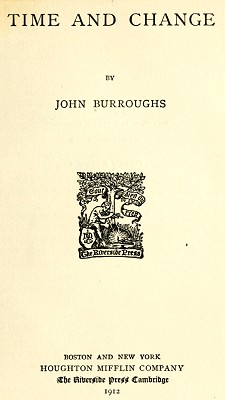
Burroughs, John: Time and Change . Houghton Mifflin Company, Boston, 1912. Published October 1912. Internet Archive http://archive.org/details/timechange00burr Review. John Burroughs' (1837-1921) principle interest is in geology, which he pursues and records during a world tour. At Waikiki he enjoys riding in an outrigger canoe and makes an attempt at surfboard riding. See: 1912 John Burroughs : Surf Riding at Waikiki. |
 |
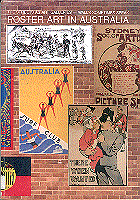
| 1993 Butler, Roger : Poster Art In Australia National Gallery of Australia, Canberra ACT 2600. 1993 First published in 1993 in conjunction with the exhibition The Streets as Art Galleries - Walls Sometimes Speak : Poster Art in Australia National Gallery of Australia, Canberra 5 November 1993 to 6 February 1994 Curated by Rodger Butler, Curator of Australian Prints, Posters and Illustrated Books. Soft cover, 104 pages, extensive black and white and colour illustrations, Notes, Exhibitions and Reviews, Bibliography. Review Exhibition catalogue notable for the work of Gert Sellheim, pages 20, 37 and 42, and the single known poster by William Dobell, page 40. See Posters and Postcards. |
 |
| a |
|
|
|
|
|
|
|
|
|
|
|
|
|
|
|
|
|
|
|
|
|
|
|
|
|
| home | catalogue | history | references | appendix |