 |
surfresearch.com.au
appendix
: decor |
| home | catalogue | history | references | appendix |
|
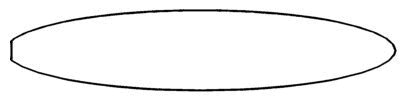 |
Clear, or
Natural, in the case of timber boards |
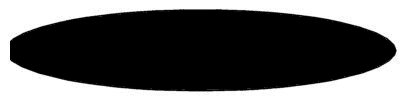 |
Solid Colour, or Colour See # 99 |
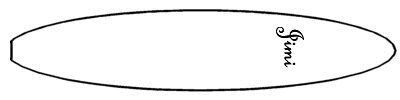 |
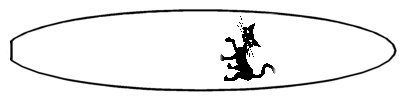
Script or Text
Early use,usually to identify rider. See # 204 |
 |
Logo or Image
or Graphic
See # 80. Early use of Surf Life Saving Club logo in Australia. Note branded Outrigger Canoe Club logo, See # 105 |
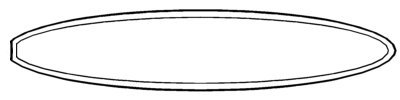 |
Pin Lines (indented)
Early use for decor, with advent of fibreglassing used to cover rail lap cut. See # 26 |
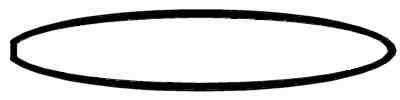 |
Rail Overlap
Usually in conjunction with solid colour on opposite side. See # 144 Note sprayed false rail overlap in late 1980s. |
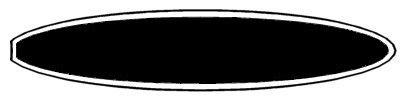 |
Full Deck or Bottom Panel |
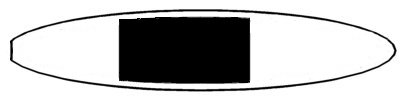 |
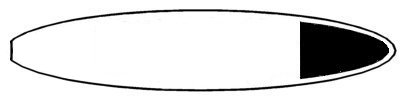
Deck Patch
Often reinforced (Volan) fibreglass patch for knee paddling See # 26 |
 |
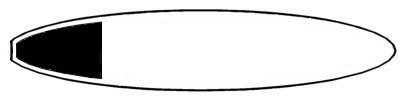
Nose Patch
Became prominant with nose riding contests in the 1960's, often applied with Slipcheck. See # 74 |
 |
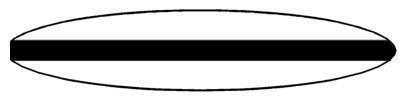
Tail Patch
Often reinforced (Volan) fibreglass patch. 1980s saw introduction of adhesive rubber grip patch .See # 133 |
 |
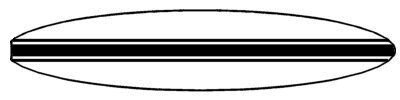
Stripe |
 |
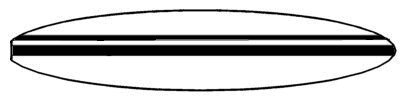
GT Stripe
(Multi stripe) |
 |
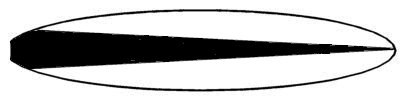
Racing Stripe, left
(Multi stripe) See # 34 |
 |
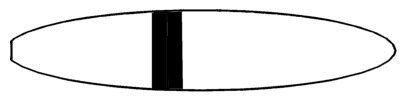
Watchhand
See 37 and # 33 |
 |
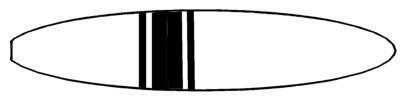
Band
See # 109 |
 |
Cigar Band |
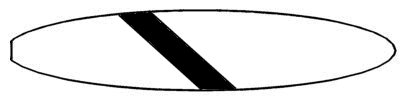 |
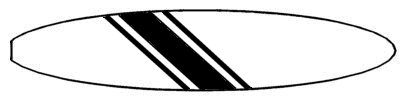
Offset Band
See # 73 |
 |
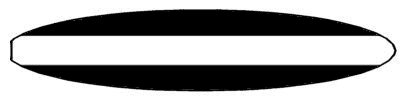
Offset Cigar Band |
 |
Rail Panels |
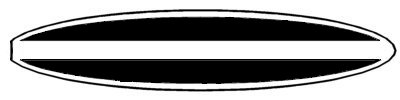 |
Indented Rail Panels
See # 23 |
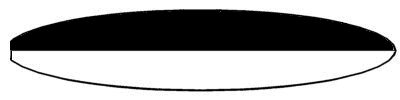 |
Two Tone |
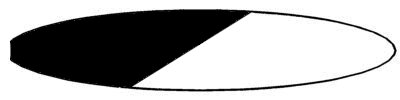 |
Offset Two Tone |
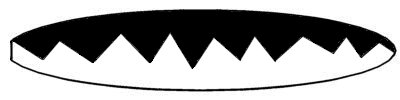 |
Fractured
See # 206 |
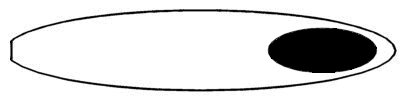 |
Nose Oval
Nose Circle Usually used on bottom to highlight concave nose See # 80 |
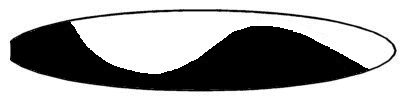 |
Wave
Ying/Yang Larry Bertleman, 1978 See # 58 |
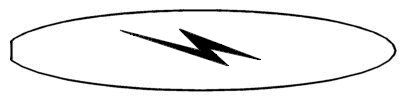 |
Lightning Bolt
Gerry Lopez, 1972 See # 90 |
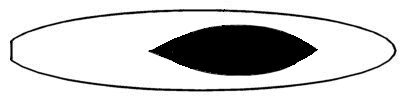 |
Foil
See # 40 |
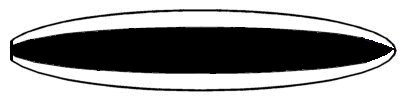 |
Wide Rail Foil
Originally on 1969 Mini guns, reprised 1978 by Simon Anderson for his Energy label. See # 95 |
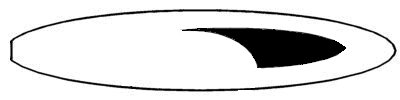 |
Offset Foil |
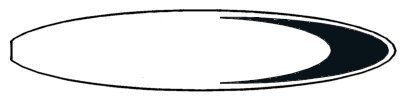 |
Wing
See # 106 |
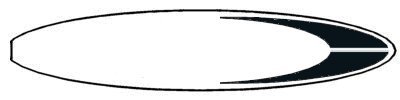 |
Split Wing
See # 84 |
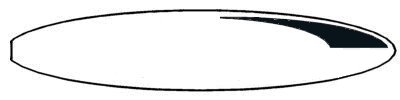 |
Half Wing, Left. |
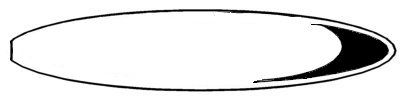 |
Offset Wing, Right |
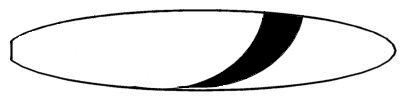 |
Slash
Tom Carroll 1976. |
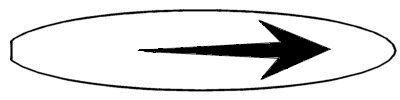 |
Arrow
First notable use by Herbie Fletcher circa 1976. Also Bob McTavish' Bluebird Surfboards, 1976 |
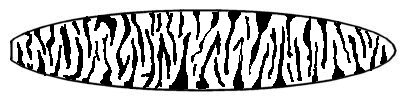 |
Animal Hide
-Tiger/Zebra
Jerry Lopez, circa 1980. |
In the period before European
occupation
of Hawai'i, given that board design was not standard and the
individual
grain and colour (sorry, color) of timber boards, it is likely
that any
group would be clearly aware of the identity of the “owner”
(note that
pre-occupation many items were held in common), and posibly the
shaper,
of all the boards that comprised the local quiver.
Across Polynesia, the canoes of the
Hawaiian
Islands were noted as being the most utilitarian with a minimal
use of
decoration and this was likely to be similar in surfboard
construction.}
From evidence of the earliest
photographs
of the resurgence of Hawaiian surfing in the 1900's, riders have
added
decoration to their boards. This initially was as simple as the
use of
painted text to identify the owner, as many photographs of
the Kahanamoku
Brothers illustrate. Invariably these were positioned at the
sweet spot,
for obvious asthetic reasons, and this is common to the present
day.
This was to expand with the use of
more
elaborate script and graphic images and by the 1930's decorated
boards
were common and were precusors to the decal - a specific
text/image to
identify the board builder/manufacturer.
As boards were made of wood (solid or
hollow) this was either painted, branded or an affixed metal
plate.
The use of a regular branding iron
for
the boards of members of the Outrigger Canoe Club, Honululu is
probably
the first example of such marking.
Examples of metal plates and adhesive
stickers identifying Tom Blakes Hollow design date from around
the same
period, although manufacturing details were usually at the tail
of the
board, again a tradition still prevelant today.
In Australia the use of logos (often
the
Life Saving Reel) indentifying the board with a Life Saving Club
was common.
Although boards were usually
easily
identified by the inherent unique characteristics of the
timber,
the use of full colour paint was not unknown, although this may
have also
been used for waterproofing.
More common was the painting of
graphic
images or the use of paint to highlight the design.
The use of 'pinlines' - a line that
shadows
the template outline - being another early design, that would
come into
it's own with the introduction of fibreglassing in the 1950's.
By the 1960's several designs,
particularly
the use of stripes and bands, were virtually standard.
With the introduction of foam and the
development of sophisticated fibreglassing techniques other
designs such
as deck and nose/tail patches were adopted.
The use of pigments and tints to
produce
decor of high quality became an intricate and demanding process,
an art
form that vitually disappearred in the 1970's when colour was
applied with
a spray gun directly onto the foam blank.
The use of the spraygun was to
quickly
expand the limits of decor imposed by the standard use of tints
and pigments,
in Australia notably in the much copied work of Martin
Worthington ay Terry
Fitzgerald's Hot Buttered Surfboards, circa 1972 - see #
104.
Although the use of spray opened the
boundaries
of decor design in many cases it simply reprised earlier
devloped designs,
while reducing production demands.
In the 1980's with the
professionalism
of surfing, colour decor virtually disappeared from the majority
of boards
and the prominant positioning of "sponsors" decals became
standard.
Other developments such as the use of
acrylic spray to replace the gloss/finish coat and the
application of spray
paint onto the glassed board (as opposed to onto the foam blank)
further
reduced production difficulties - if the colour design was not
right it
could be sanded off and redone.
In the late 1990's colour began to reappear as a desired decor feature, particularly with the resurgence of Malibu models that were similar in dimension to boards of the 1960's.
| home | catalogue | history | references | appendix |